Showing posts with label cranks. Show all posts

Saturday, July 26, 2014

Baying at the moon

The “Get a life” edition

On July 24, 2014, Daily Kos observed the forty-fifth anniversary of the conclusion of the Apollo 11 moon mission with a photo taken shortly after the command module's splashdown in the Pacific Ocean. The photo was labeled with some text:
At 12:51 p.m. (EST) on July 24, 1969, the Apollo 11 module landed in the Pacific Ocean, southwest of Hawaii. This completed the first mission humanity ever made to another celestial body.

That statement is straightforward enough, but I thought it gave short shrift to two other missions that preceded the historic first moon landing. On Facebook I offered the following comment:
Clarification: The first manned mission to *land* and return. Both Apollo 8 and Apollo 10 went all the way to the moon and back, but they were lunar orbital missions only (the latter including a jaunt with the lunar module that came within ten miles of the surface).
Another FB user promptly offered a kind of rebuttal:
ABR I think the word humanity speaks to that.
Huh? I casually replied:
Humanity was aboard Apollos 8 and 10 as well.
Soon others got into the act:
BA Bet you are a real fun guy at parties.
DG There is no ambiguity in the graphic. The word "made" means "landed". Get a life.
Unchastened by the dictionary revisionism (and the slight against my party suitability), I replied:
I think the Apollo 8 astronauts felt like they had "made" a mission to the moon, which they orbited ten times before returning home. It takes nothing away from Apollo 11 to acknowledge that.
Finally, someone chimed in to defend my point:
CL Agreed. My outstanding memory of the Apollo missions was, at the age of 14, listening to Anders, Borman and Lovell aboard Apollo 8, orbiting the moon, giving a Christmas (1968) message to the people on earth. That was just awesome - and the furthest that men had ever been from earth. There is a tendency to simplify history to 'spot facts' and glib milestones. Apollo 8 was first to the moon. Apollo 11 was first to land. Equal achievements, I'd say.
Unfortunately, despite this positive reinforcement (although I never claimed that the orbital missions were equivalent to the landing missions), my original simple statement of clarification remained a sticking point for a Facebook user with the initials MN:
MN You can't go TO the Moon If you don't land on It. As defined during the 8 and 10 mission, they ORBITED the Moon, Just like John Glenn ORBITED the Earth. Chris, They are NOT equal achievements, by any stretch.
This remark is a perfect headdesk opportunity, especially in its creative use of the word “defined.” Is MN prepared to tell Borman, Lovell, Anders, Stafford, Young, and Cernan that they did not go “TO” the moon because they neglected to land on it? Lovell was also the commander of the Apollo 13 mission which aborted its moon landing because of an explosion in its service module. Should we tell Lovell that, nope, he did not go to the moon twice because neither of his missions landed? Sure, he never got to set foot on the lunar surface, but Jim Lovell definitely made two missions to the moon.

Let's not forget the epic moon missions that preceded Apollo 11 in the excitement over the anniversary of the first landing. Some of us remember those thrilling days and rue their passing.


Friday, July 05, 2013

Familiarity breeds contempt

No love for Sister Sarah

Townhall.com has sponsored one of those irritating pop-up polls that haunt the Internet. I normally ignore such things. My pop-up blocker catches most of them, but this one slipped through. (Okay, I confess! I asked for it. Townhall sneakily embedded it in a Facebook ad and I clicked on it.)

The question was very simple and probably easy to answer for 99% of the population. It asked the weighty question, “Should Sarah Palin run for Senate? She's considering it.” Since “Hell, no!” and “Only for the entertainment value” were not provided as response choices, I settled for “No, her time has passed.” The alternative was “Yes would love to see her back in elected office,” which seemed too subtle in its irony.

After voting, I got to see the results. Over two-thirds of the respondents wanted Sarah to run (but there was no way to determine how many of those respondents were mentally appending “and lose” to their answers). This is not a surprising result from a crowd of people willing to follow a link provided by Townhall.com. (Of course, Sarah might lose interest if she discovers that a Senate term is six years long.)

The responses were broken down by state. I looked at them one by one. Idaho was the most eager to see Palin on the Alaska ballot for U.S. Senate. No big surprise. I moused around until I found the state most opposed to a Palin candidacy. (You're ahead of me, right?)

It was Alaska. The state that knows Palin best expressed itself with 55% in her favor and a record 43% opposed. No other state broke out of the thirties in its opposition to the half-term governor. And don't forget that this is a Townhall crowd. I was not surprised. You weren't either, were you?

Wednesday, August 08, 2012

Stupidity in spaaaaaaaaaaaaace!

Idiots write letters

There's nothing like a successful space mission to set off the smugly ignorant. “Think about the children!” they cry. They wring their moist hands over the millions and billions of dollars that they assume were wastefully blasted into space instead of used for charitable works. This morning's San Francisco Chronicle provided a perfect case in point:
But what about the hungry?

The land rover Curiosity arrives on Mars safely. What a feat!

But $2 billion to find water on a planet when hundreds of children go to bed hungry, when teachers, police and firefighters are dismissed? Where are our priorities?

People might say, “But look what we get from our space travel.” When a child says, “Mommy, I'm hungry,” does her mother say, “I know honey, but isn't it wonderful we have Teflon”? What a country.

RMS-O, San Francisco
Damn! The stupid is strong in this one. Did you catch the “hundreds of children”? The ignorant letter-writer doesn't even appreciate the scope of the problem she is decrying. There are millions of children in the United States alone who lack adequate supplies of food, without even taking into account the more severe problems elsewhere in the world. Totally clueless people should not be giving others advice.

That, however, is not my main point. I want to underscore the stupidity of blaming NASA's budget for our failure to ameliorate social ills. As Isaac Asimov pointed out decades ago, it makes no sense to take money from one worthy cause to fund a different worthy cause when so many unworthy money-pits are right under our noses. The cost of the Curiosity mission was reported at approximately $2.5 billion (which the Associated Press foolishly cited as “budget-busting”). That total amount would barely have covered three days of the misbegotten war in Iraq. And you may recall that war did last a little over three days.

That sheds a slender ray of perspective-giving light on the subject, doesn't it?

In the meantime, quite apart from the exciting prospects of scientific discovery and exploration, Curiosity's budget supported (and supports) teams of engineers, scientists, and technicians. These people are a key component of the nation's tech base and infrastructure. Should we outsource all of their jobs to China or India? Besides, they pay mortgages and feed their children just like everyone else. None of the Curiosity budget dollars were simply blasted into space. They were spent on the ground, adding to the economic contributions of our technological and scientific endeavors.

Let's take up a contribution to shoot the San Francisco letter-writer into space. She'll be right at home in the vacuum.

Friday, July 20, 2012

Subatomic subgenius

Ommmmmmmmmmmm

Leon Lederman has a lot to answer for. He famously branded the hypothetical Higgs boson as the “God particle” in the title of his 1993 book on the subject. As a stroke of marketing genius, however, it's undoubtedly had him chuckling all the way to the bank. It follows that recent news from CERN has resurrected the divinely-inspired term, as well as rousing into action the usual crowd of scientific illiterates. A representative of that obscurantist cohort popped up in the letters column of the July 7 edition of the San Francisco Chronicle:
The sages have been telling us for many, many centuries that God or love dwells within our hearts as ourselves. This is found in meditation and costs nothing.

The physicists' instruments have cost millions and are just getting a little glimpse of what is found in totality in meditation.

GVM, Gilroy
Oh, yes. Meditation and occult wisdom long ago revealed the essence of the Higgs boson and its function in the Standard Model of particle physics. We could all save a lot of money if high-energy physics research budgets were devoted instead to the purchase of floor mats and incense sticks. No doubt.

I fired off a response, which the Chronicle did not see fit to publish. Here it is, in full:
I eagerly await GVM's elucidation of the difference between bosons and fermions. Surely he must know.
Stay tuned for the next exciting breakthrough in meditation physics. I predict thrilling new insights into the nature of the bozon, the long-posited fundamental particle of clowning. One hears that the elusive mote might yet be detected with bubble chambers filled with super-cooled seltzer!


Saturday, May 12, 2012

Come back, Harold Stassen!

All is forgiven! 

Once upon a time, an exciting young politician was elected governor of Minnesota. The 31-year-old “boy wonder” was clearly destined for great things, and within two years was giving the keynote address at his party's national convention—at which point he peaked.

Harold Stassen's high-water mark was that 1940 Republican National Convention, where he was part of Wendell Willkie's successful insurgent campaign for the presidential nomination. In 1944, Stassen was himself a presidential candidate. And in 1948. And 1952. He took a break in 1956, the year an incumbent Republican (Eisenhower) was seeking re-election, but Stassen was back at it in 1964 and every four years thereafter (except for 1972, when Nixon was seeking a second term). Harold Stassen died in 2001. However, his death had almost no impact on his election prospects. Those had predeceased him by nearly fifty years.

Today Ron Paul wears the mantle of perennial Republican presidential candidate, although he has a ways to go before he has as many lost crusades under his belt. In another distinction from Stassen, Paul is blessed with a visible and noisy coterie of devout supporters—supporters who live in their own special alternate universe. A letter to the editor of the Sacramento Bee is a case in point:
Don't count out Ron Paul in GOP presidential race

Re “Ron Paul wins majority of Maine GOP delegates” (Nation in brief, May 7): There's heated race going on in the Republican primary right now, but you wouldn't know it from the reporting by the mainstream media.

The MSM is reporting as if Mitt Romney has locked up the nomination already, which simply isn't true. The media is not reporting that there are huge turnouts of thousands at Ron Paul events all across the country; that Ron Paul has been winning delegates in many states, and that he has secured his name on the ballot at the Republican National Convention in Florida later this summer.

Ask yourself why the media is not covering this newsworthy information. Romney can barely draw 100 people to his rallies. It isn't over until it is over. Mitt Romney does not have 1,144 delegates yet, and Paul is gaining on him, fast.
—MN, Sacramento

By golly! You know what? Letter-writer MN is right! According to a recent Associated Press tally, Romney has only 966 delegates. As for Ron Paul, why, he has ... 104! (Note to mathematicians: the exclamation point is for ironic emphasis—not factorial notation.) As illustrated in a New York Times chart of the AP data, there are 821 uncommitted delegates. Given that Ron Paul is “closing fast,” we can easily see that a sweep of all remaining delegates will boost Paul to a staggering ... 925!

Ron Paul's supporters really can't do the math, can they?

Friday, July 08, 2011

Exorcism for fun and profit

It's not just for priests anymore!

There are two good ways to tell if a psychic is a fraud: (1) They all are. (2) They don't cringe at the name of Steve Rubenstein.

Who is this Steve Rubenstein, you ask? He writes for the San Francisco Chronicle. He has an engaging just-the-facts style that might seem out of sync with New Age woo, but his wonderfully deadpan reporting deflates all pretensions in a delightfully effective way. Have you heard the one about the swordsman whose blade was so sharp his opponent didn't realize he had been decapitated until he turned his head and the whole thing fell off? That's Rubenstein.

He sent some heads rolling in the July 6, 2011, edition of the Chronicle with an article titled “What's in your closet?” Read the whole thing on the Chronicle website (where its title was changed to “Cleaning houses with psychic Sheldon Norberg”). Below I present some choice excerpts for your delectation:
What's in your closet?

Steve Rubenstein
SPECIAL TO THE CHRONICLE

There had to be a reason why a perfectly nice $1.7 million Marin County house wasn't selling. Maybe it had something to do with ghosts.

If so, it couldn't hurt to call in an expert. And there is no greater expert in persuading stubborn and obstinate ghosts to leave a haunted house than Sheldon Norberg, 48, a slender man with a shaved head who has been driving demons, devils and negative energy from Bay Area houses for the past two decades, at $1,200 per dwelling.

“I'm not cheap,” Norberg said, sitting quietly in a lawn chair by the front door to get a feel for what he would soon be facing inside. “But selling a house is a million-dollar transaction. Why take a chance?”
How true! I mean, his remark about not being cheap. The $1200 fee seems really clever—not such a round number that it seems arbitrary. Sheldon put some thought into that!
He sat with his eyes closed, his palms upturned, to enhance reception. At last he declared that this particular three-bedroom house, on a shady corner on the banks of Lark Creek, was by no means hopeless. True, there was negative energy on the top floor and in the basement. But nothing he couldn't handle.

“We are vibrating entities,” he said. “Realtors don't like to deal with these things. They think it's all woo-woo stuff. But prospective buyers get a feeling the moment they walk into a house. If there is anger, or sadness, or unresolved feelings inside, you have to handle it.”
Please tell us, Sheldon: At what frequency do we vibrate? Is it best measured in Hertz or kilo-Hertz? Perhaps even mega? For some reason, they never tell us. The “woo-woo stuff” is apparently really hard to measure.

Although Norberg neglected to inform Rosenberg about any specific frequencies he might have detected, the self-proclaimed psychic was otherwise ready to demonstrate his powerful talents to the Chronicle reporter. The house in Marin, it turns out, was full of anger and sadness. What's more, Norberg knew where the anger and sadness were centered!
[The house] was being sold, Norberg said, because the owners were getting divorced. After two months on the market and no offers, it was time to find out why. He headed upstairs, to the master bedroom. There he closed his eyes once more and declared the room to have been the site of conflict and sadness.
Okay, folks. You have to give Sheldon this one. His awesome sixth sense has manifested its supernatural acuity. He could tell the divorced couple experienced anger and sadness in the master bedroom.

As a professional psychic, Sheldon knows enough to pretty things up a bit with some Eastern mumbo-jumbo while he's at it:
This could be, Norberg said, because of the feng shui of the room, and its orientation on the north-south axis, its proximity to the nearby creek, the lack of sunlight and the heavy crossbeam that ran across the middle of the ceiling, cleaving the energy flow.

Also there was the divorce. Perhaps that had something to do with it too, he said.

“There is anger here,” he said in a soft voice, calling on his store of psychic powers.
We scoffers must stand in awe of such a demonstration, faithfully and reverently documented by the Chronicle's ace reporter. Who can doubt Sheldon Norberg now?
The owner of the house, a young woman named Rosemary, pulled up in her Lexus to check on Norberg and see firsthand what she was getting for her $1,200. (She had already paid $10,000 to a real estate stager to make the house look nice, and that had bought her a few bowls of decorative seashells and plastic lemons, so another $1,200, she opined, was just the cost of doing business.)

“I never used a service like this before,” Rosemary said. “But if it works, it's not really that expensive.”
Oh, Jiminy Christmas! The “real estate stager” has an even better gimmick than the psychic. For a $10,000 fee I would have supplied real lemons! For an extra $5000, I'd even toss in a few limes!

Although Norberg had already demonstrated his skills were almost up to the level of the real-estate stager, he continued to strut his stuff. Rosemary was there to provide first-person validation of the psychic's amazing insights.
Norberg stood in the bedroom where Rosemary acknowledged that she and her husband had themselves some pointed misunderstandings, and the psychic announced that he was feeling chest constrictions, emotional sadness and compressed energy. Rosemary nodded. Then he descended into the basement, a dank windowless storage space with a lot of junk lying around, and said it was not the most cheerful room in the house, either.
Speaking just for myself, I have to admit that I have always regarded dank, windowless basements as cheerful places, but I guess that's because I'm not psychic. Sheldon's preternatural powers can penetrate mere façades.

To ensure that Rosemary could see that she was getting her money's worth, Sheldon banished the basement's oppressive miasma.
He proceeded to sit down and close his eyes. The psychic said he does his best work with his eyes closed. It concentrates the energy.

“I feel the Earth shifting with the relation to the rotational planes,” he said at last. “The magnetic field has changed.”
There will be scoffers, I know. Skeptics will demand to know what the heck “rotational planes” are supposed to be. People who are not entirely ignorant of science will point out that magnetic fields can be detected and measured. The absence of appropriate electronic gear suggests that Sheldon Norberg prefers not to document his psychic manifestations with hard data. It's probably because any trace of doubt is exceedingly harmful to psychic powers. I'll bet Rubenstein had to be on his absolutely best behavior.
Norberg sat motionless for three hours, until the psychic heavy lifting was done and the house, he said, was clear. Afterward, Rosemary said the house felt pretty much the same to her as it did before, but maybe that was because she was “not in touch with the major energy channels.”
Rosemary is an absolute jewel, isn't she?

I'll admit, though, that Sheldon is starting to impress me just a bit. While earning $400 per hour while sitting stock-still may sound easy, just give it a try. You'll get the fidgets within minutes. Sheldon is earning his fee. (I'll bet the entire time he was thinking about the advantages of going into real-estate staging instead.)

And now—quite obviously—it's time for the happy ending! No newspaper puff piece would be complete without it.
Two days later, her real estate agent threw open the doors to the public for an open house. Rosemary had high hopes. Seventeen couples toured the newly energized property.

“But nobody made an offer,” Rosemary said with a sigh.
I'll bet Rosemary forgot to bury a little plaster statue of St. Joseph on the grounds. You need to bury him upside-down, for some reason, but it always works. You can get one for just a few bucks from your local Catholic bookstore. (I suspect that many Catholic bookstores are surviving on the margin provided by hordes of superstitious real-estate agents.)

Well, if the story can't have a happy ending, could it at least have a twist? Rubenstein digs deep into the story behind the story and comes up with a precious nugget:
Perhaps her optimism in Norberg was misplaced, she acknowledged, and perhaps her optimism in the real estate market was, too. According to the comps, which is real estate lingo for please-get-your-head-out-of-the-clouds, the house was worth not $1.7 million but $1.4 million.
I am not a real-estate expert. Neither, probably, are you. However, I have it on good authority that it is difficult to sell a house that is overpriced by $300,000. Imagine that!
“Hiring Sheldon, I was just covering all the bases,” she said. “It's good to have the positive energy. But we might have to lower the price just a little, too.”
You think? (Evidently not.)

Friday, February 11, 2011

Trim to fit

The power of truncated quotes

I was browsing through Orac's Respectful Insolence when I stumbled across his post on the latest inanity by Mike Adams. The purchase by AOL of the Huffington Post had inspired Adams to celebrate a wonderful new opportunity for “alternative health authors.” (Why do they use so many syllables when “cranks” is so much more economical an expression?) Since HuffPo is “headed in the direction of conventional media,” its wackier writers might be pleased to hear that Mike Adams is ready to welcome them at his NaturalNews site:
Many of the site's best writers are wondering where they can go to get their alternative medicine stories published. It certainly isn't WebMD, which even the New York Times just called out as being a mouthpiece for the pharmaceutical industry, saying “WebMD is synonymous with Big Pharma Shilling”. (http://www.nytimes.com/2011/02/06/m...)
Are you as impressed as I am? Imagine! Even the stodgy old New York Times recognizes that WebMD is merely a front for rapacious drug companies. Naturally I was inspired to click on the link to learn more. Just how thoroughly did the Times trash WebMD? Inquiring minds want to know!

It was really a bit of a let-down. Writer Virginia Heffernan did not exactly make the statement quoted by Adams. What she really wrote is this:
In more whistle-blowing quarters, WebMD is synonymous with Big Pharma Shilling.
Oh. That's just a little bit different.

True to tell, Heffernan does not actually like WebMD. Equipped with her pertinent experience as a television critic and degrees in English literature, Heffernan goes on to complain about WebMD's product placement, advertisements, and connection to various pharmaceutical companies. She even cites an investigation by Sen. Charles Grassley, as if he's a reliable source (she calls him “Chuck,” for some reason). She adds that “WebMD has become permeated with pseudomedicine.”

Sounds like Mike Adams would feel right at home.

Saturday, December 27, 2008

Universal experts

Bringing home the Bacon?

Sir Francis Bacon famously said, “I have taken all knowledge to be my province.” As a philosopher in the late 16th and early 17th centuries, Bacon could say such a thing without being thought ridiculous. It was still possible to be a Renaissance man with catholic interests. Today, however, even single fields of scientific endeavor have grown so broad as to defeat anyone's attempt to be acquainted with all of its aspects, let alone master them. Mathematicians, physicists, biologists, chemists—all are specialists who carve out particular areas within which they hone their expertise.

We nevertheless still enjoy the presence among us of latter-day Bacons. These contemporary universal scientists are willing to proclaim themselves and offer authoritative opinions on any topic. It seems a pity that instead of honoring their erudition, we most often hide our grins behind our hands and try not to chuckle too loudly. For some reasons, engineers seem to fall into this trap quite often, mistaking their training in one circumscribed field as the foundation for expertise in biology (see the Salem hypothesis). Engineers aren't alone in this. Mathematicians like William Dembski and semi-mathematicians like David Berlinski demonstrate that a head for numbers may also contains pockets of hard vacuum.

An example of one of these self-proclaimed universal experts wandered into the clutches of Judith Martin, who writes an etiquette feature under the name of “Miss Manners.” The following item is from her column of November 27, 2008, although it may have been published on other dates by various newspapers:
DEAR MISS MANNERS: I sometimes find myself in social gatherings where people are discussing some social or political issue with a single point of view clearly preferred by most or all other members of the group, when it is a point of view I cannot bring myself to share.

I am aware that sometimes (as in the case of climate change), this occurs because of my scientific background and my thus having certain knowledge that most people do not, while it sometimes has more to do with my inclination toward contrariness, a character trait that has horrified my wife and which I am working (with limited success) to reduce.

My personality traits aside, is it rude to respectfully share a fact that flies in the face of the apparent group consensus?

An example: “You may not know this, but for the past few years there has been a trend among scientists toward skepticism regarding global warming. Many feel the media is hyping the issue, and several have asked the U.N. to take their names off the report.”

Or is it better to remain silent and allow the discussion to continue on its course with more and more agreement, though I find it sad that such lovely, well-educated people could hold such ill-informed opinions?

GENTLE READER: It is not enough for you to supply the dialogue; Miss Manners would have to hear you speaking it and check out your audience.

She can imagine your words about the environment being said pleasantly, in the clear spirit of, “Well, there is another side to this,” in a freewheeling conversation among dedicated but open-minded friends.

But your wife’s reaction worries Miss Manners. It seems only too likely that you are enjoying your dissensions far too much. That is your cue to stop.
It's not a bad answer that Miss Manners gives, though it appears to err—understandably—on the side of politesse. Here's my answer, which is less constrained:
DEAR MR. KNOW-IT-All: Are you a climatologist? No? Then wherein does your “scientific background” lie? The consensus regarding global warming and climate change is stronger than ever among climatologists, so it would be interesting to learn the basis for your contention that there is a “trend among scientists toward skepticism.” (I hope you don't mean the pathetic list compiled by the Heartland Institute.) You state that “several have asked the U.N. to take their names off the report,” by which I presume you mean the the Fourth Assessment Report of the United Nations Intergovernmental Panel on Climate Change. Can you name even one? There's Christopher Landsea, who left the IPCC over the issue of the impact of global warming on hurricanes, which is his specific area of expertise, but even Landsea does not deny the reality of global warming (“we certainly see substantial warming”). Can you name anyone else?

Your wife is right to be concerned that you are coming off as a pompous ass. If you keep quiet, perhaps no one will suspect.
Note

I was reminded of the Miss Manners column when I noticed that PZ Myers had tossed a naive anti-evolution “expert” to the ravenous hordes over at Pharyngula. (I took a quick nip myself.) If you bother to read Halfway There then you're more than likely to have already seen PZ's post this morning on poor old Martin Patterson (“I just want to share what I have learned with other intellectuals”), but if you haven't, don't miss the fun.

Monday, January 01, 2007

The art of the non sequitur

Let there be dark

Howard Smith is drumming up some attention for his recent book by penning a think-piece for the newspaper trade. I read his “Cosmic resolutions for 2007” in the San Francisco Chronicle. I presume it's cribbed from the book he's promoting: Let There Be Light: Modern Cosmology and Kabbalah, a New Conversation between Science and Religion. Although I agree that one shouldn't judge a book by its cover, I think the title tells me that I don't need to read it. Smith's opinion piece for the newspaper just confirms that impression.

Smith is an astrophysicist affiliated with the Harvard-Smithsonian Center for Astrophysics, so his professional qualifications are in no need of exaggeration. He must be a top-notch astrophysicist. Not content with having attained the upper reaches of his profession, however, Smith has decided to become a moral theologian.
There is long tradition of deriving moral lessons from cosmology, with familiar examples being theological. The story of Adam and Eve, for instance, teaches that God made all humans related, descendants of one couple. In the 16th century, the Jews who were followers of the Jewish mystic tradition of Kabbalah taught that the cosmos was born and is changing, and derived a cosmic lesson: humanity can affect that change, as righteous deeds improve the fabric of creation. The contrasting, predominant scientific view—a static universe—persisted until Hubble, and lacked this ethical imperative.
By golly, we should have immediately realized that the static model of the universe was wrong because it lacked an ethical imperative. How silly of humanity not to have caught on to this right away! In an earlier era, astronomers could have saved themselves a lot of time looking for more planets if only they had accepted Hegel's whimsical argument that philosophy required the existence of exactly seven.
It is possible to appreciate both the insights of religion and the lessons of science. This year's precise, self-consistent cosmology certainly prompts one ethical reflection: science's intellectual openness and quantitative inquiry have been wonderfully productive. They are worthy of emulation. Here's another: newly uncovered puzzles (dark matter, cosmic acceleration) compel humility. We do not know it all. Cosmology and Kabbalah illustrate that science and religion, presupposed opposites, speak to the same mysteries. Their perspectives, while different, are not necessarily contradictory. Their moral imperatives can enrich and motivate both rational and righteous behavior.
Let's see if I understand this: Science has been “wonderfully productive,” but we still haven't pinned down that business of dark matter. Thus we must acknowledge that we don't know everything and learn from the Kabbalah. Because religious mysticism does not necessarily contradict science. And we may be able to reconcile their moral imperatives (remember, science has a moral imperative now because the universe is not static).

It's a trendy notion. I'll give it that. Stephen Jay Gould struggled with his concept of non-overlapping magisteria (NOMA) as a means to call a time-out in the boxing match between science and religion and send them to their respective corners, but Gould didn't make too many friends on either side of the divide with that approach. Before that, we were treated to God and the New Physics by Peter Davies. And let us not forget Robert Jastrow's God and the Astronomers, in which he famously says, “For the scientist who has lived by faith in the power of reason, the story ends like a bad dream. He has scaled the mountains of ignorance; he is about to conquer the highest peak; as he pulls himself over the final rock, he is greeted by a band of theologians who have been sitting there for centuries.” Yes, indeed; let's ask those nice theologians how they derived their preferred value of the morality-laden Hubble constant.

More recently we've seen the reconciliationist effort by Francis Collins (“God is the answer to all of those ‘How must it have come to be’ questions.”) of the Human Genome Project. For these good folk it seems that science needs a certain something more—a dash of greater good of some kind. We humans can't be left to our own devices. Let's dash around looking for transcendent moral imperatives or ethical contexts.

Or maybe we can write a book about how great it is that we can supplement the proven scientific path to knowledge with the foggy and ambiguous religious maze toward uncertain mystical knowledge. Then, if we're very, very good, we can await our reward, which could just be the $1.4 million Templeton Prize for Progress Toward Research or Discoveries about Spiritual Realities.

Oh, I've seen the light!

Saturday, December 09, 2006

Intelligently designed politics

The ID wave of the future?

When I was done with the task of chastising the brand spanking new creationists who won the Answers in Genesis essay contest, I figured that was that. Perhaps I will never learn.

Paul Lamicela, the grand prize winner, has created a website where he offers a slightly spiffed up version of his AiG essay, Antimatter and the Big Bang. No, it's not improved. While he was at it, Paul uploaded an essay on the importance of taking the opening lines of Genesis as literally as possible. It's a kiddie version of Ken Ham's argument about foundations: Biblical literalism is bedrock while an allegorical reading is shifting sand. Paul even cribs art from AiG with which to illustrate his unoriginal points. If he continues to hone his writing skills, Paul will be able to join the ranks of the adult creationists who spend all their time using cut-and-paste to recycle their old arguments.

While R. Josiah Magnuson is younger than Paul, the writer of the second runner-up essay has outstripped his rival in his career as a creationist. Josiah is officially the “Intelligent Design advisor” to a presidential candidate. That's president of the United States, not president of Josiah's sophomore class. (Josiah is homeschooled, anyway.)

Who could the presidential candidate be? Surely it must be one of the conservative candidates, so that lets out Clinton, Gore, Obama, or Edwards (even though Edwards was born in Magnuson's home state of South Carolina). Perhaps it's McCain, or Romney, or Cheney, or (giggle) Frist, or (ha!) Allen.

Nope. None of the above. If you clicked on the link, you know it's Gene Chapman! (Someone please cue up Hail to the Chief.) Chapman is so old-fashioned that the major plank in his platform is anti-communism. Yes, that's how traditional he is. He also dislikes “Demopublicans” (and, I assume, “Republicrats”), but is somewhat more kindly disposed toward the Constitution Party, whose nomination he would apparently not spurn.
Your only Non-Communist Third Party Abolitionist Alliance candidate for President of The United States, seeking the Libertarian, Constitution, Southern, Goldwater-Reagan Conservative, Independent, Reform and Boston Tea Party nominations.
I really don't think all of those are political parties, but what the heck. Chapman is a maverick candidate.

He is concerned about the possible impact on his candidacy of another zero-visibility presidential aspirant, George Phillies. He's a candidate for the Libertarian Party's presidential nomination, a prize that Chapman appears to covet for himself. Since the stakes are so small, the attack must be disproportionately large. Chapman has unleashed none other than his Intelligent Design advisor to destroy the candidacy of Phillies—by exposing him as a communist!
R. Josiah Magnuson On The ACLU

A main reason Chapman said that Phillies is seemingly a Communist because, for one, Phillies is a card-carrying member of the ACLU. The ACLU was founded by Communist Roger Baldwin, who stated: “I too take a class position. It is anti-capitlatist [sic] and pro-revolutionary…. When that power of the working class is once achieved, as it has been only in the Soviet Union, I am for maintaining it by any means whatsoever.” When asked for a statement of his beliefs regarding the ACLU in the Harvard 1935 class book, Baldwin proclaimed: “Communism is the goal.” True to its purpose, the ACLU has for years attacked Christian values in these United States, and effected the removal of much of true Conservative principle and American heritage from the minds of the people.
Why, it makes one's heart swell with pride! Little Josiah has learned the quote-mining lessons of creationism and is applying them diligently in the field of politics. You see, Roger Baldwin was the founding director of the ACLU. Roger Baldwin had leftist associations. Therefore, Phillies is a communist! We must acknowledge that this chain of reasoning is just as solid as Josiah's writings on evolution. No doubt about it.

I did mention quote-mining. There are several missing sentences in the Baldwin quote, their place taken by the discreet ellipsis. Here is a fuller quote: “I, too, take a class position. It is anti-capitalist and pro-revolutionary. I believe in non-violent methods of struggle as most effective in the long run for building up successful working class power.” Also, Baldwin was praising the Soviet Union at a time when Hitler had come to power in Germany and before Stalin's great purges occurred. The Soviet Union would end up as our ally in World War II. After the war, however, Baldwin and his cohorts at the ACLU spurned communist associations. The fuller story, however, weakens the case for considering the Libertarian candidate for president a communist, so those details must be omitted.

In addition to opposing communism, Chapman also dislikes taxes. In fact, Chapman pays no taxes because they are unconstitutional (in his eyes), comprising a form of slavery:
In conversations with Greek scholars at the highest theological levels of both Bob Jones University and the Southern Baptist Convention, along with my own studies, I found that there are three primary attributes of slavery in antiquity:

1) Taxation of Property (1st, 3rd and 4th Planks of “The Communist Manifesto”).
2) Taxation of Labor (income tax: flat or graduated/ 2nd Plank).
3) Counting People Like Cattle (to control labor and/ or property).
Ah, yes. The “highest theological levels” at Bob Jones University. Damn, but that's impressive.

At least I understand his concern about counting people like cattle. The U.S. Census Bureau does so at its own peril! While one can readily take a census of cattle by counting their legs and dividing by four, this technique leads to chaos when applied to human beings. We are not animals! (I knew this had to link up with creationism again somehow.)

Chapman also has the credentials to make people flock to his banner:
My most prominent accomplishment to date is that I became a whistleblower in the trucking industry hours-of-service issue at the highest levels of American government in 2001.
I fear that Chapman is one of the very few people in the world who does not look at his website as the moral equivalent of political parody. He's dead serious, but the presidential poll on his main page tells an interesting story about the visitors to his site. When asked whether they will vote for Gene Chapman, John McCain, or Hillary Clinton for president in 2008, visitors to Chapman's site choose Senator Clinton by a fair margin.

I suspect Chapman is not getting the message out to his people. Too bad for him that Josiah isn't of voting age.

Update: It appears that Chapman has folded his tent and stolen away into the night. His candidacy and his website are both defunct, so links in this post to the Chapman campaign website will not work. Go here instead. Josiah's original posts were deleted when Chapman closed down his weblog, but the youngster labors on at The Worldviews Revolution. And, yes, he's still recycling tired old creationist arguments but, after all, they're shiny-new to him.

Sunday, December 03, 2006

Spanking creationists

Spare not the rod

Oh, dear. I'm about to pick on three teenagers and I don't feel entirely good about it. I will try to avoid unnecessary roughness, although I know they come from a culture in which corporal punishment is warmly embraced.

These teenagers are budding creationists, which is hardly their own fault. They are the winners of an Answers in Genesis essay contest. Each one addressed the assigned theme, “the war of the worldviews,” and their efforts were plucked out of a stack of 126 entries and proclaimed the best. The essays are now posted on the AiG website, where we can all read and enjoy the youthful wisdom of the creationists of tomorrow. Remember: these are the best essays.

Let's begin with Antimatter and the Big Bang, a discourse by homeschooled 15-year-old Paul Lamicela of Pennsylvania on the intractable baryon number problem. Since regular scientists have yet to settle it to everyone's satisfaction, it is clearly a triumph for creation. Paul explains this in the introductory paragraph of his first-place essay:
This is an example of the War of the Worldviews in action! As I researched the baryon number problem, I found that many brilliant, evolutionary scientists indicated that this problem has basically been solved. It is a fairly technical, theoretical subject, so I had to learn many new terms and ideas. I became somewhat discouraged and almost gave up. But after more research, I found that it is not solved. Since these scientists are committed to naturalism, they have to cover up the many problems in their naturalistic, anti-Biblical models in order to still hold to their underlying belief. They are willing to use fudge factors, theoretically violate scientific laws, and discard the Standard Model of particle physics before admitting that naturalism is causing major problems in their models. Despite much experimentation, the baryon number problem is still a major problem for the big bang! God's Word is true!
Where to begin? Paul packs a lot into one paragraph, but I suppose you have to do that if you want to support as bold a conclusion as the validation of God's word. Perhaps I have not studied the Bible diligently enough, but I missed the part where God proclaimed that he was opposed to a nonmagical resolution of the baryon problem. Paul has fully imbibed the argument that every unsolved problem in science is automatically evidence of divine agency.

Let's go back to the top of Paul's initial paragraph and take note of the particulars of his indictment of naturalistic science. First, he refers to physicists as “evolutionary scientists.” This must be because scientists who work in the field of particle physics and the nature of matter are exponents of a universe billions of years old. (There is a tiny handful of exceptions to this rule: Jason Lisle is one of the few astrophysicists willing to embrace young-earth creationism, so no one should be surprised that Paul has to cite him later.)

Paul says that scientists must “cover up” the flaws in their naturalistic models to preserve their belief system. They must not be very good at concealing these scandalous shortcomings if a high school student was able to ferret out their dark secrets. In reality, as too many people do not know, scientists are always publishing their data, including even evidence that goes contrary to the general consensus. Everything is grist for their mill. It is not an indictment to say that they might even abandon the Standard Model of particle physics. Rather, that is exactly how science is done. If and when the preponderance of the evidence tilts the balance against the current Standard Model, a new model will become the standard. We are hardly there yet, however.

Fortunately for Paul, he need not worry about such upheavals in his own cozy little world of creationism. If any problems arise, you just hand over the responsibility to God. Very neat, very tidy. And not science. Not even a little bit.

The main topic of Paul's essay is the dearth of antimatter in the universe. As best we can tell, the observable universe is dominated by regular matter. Since nature appears to operate in accordance with several parity laws, why don't matter and antimatter occur in equal proportions throughout the cosmos?

An inkling of a possible solution arose when humanity first discovered that parity was not necessarily conserved in physical interactions. Our essayist points out, however, that parity-breaking cannot really answer the question because parity violations are orders of magnitude too small in their effects. Hence the antimatter problem remains unresolved, despite hints that the outline of a solution is taking shape. Paul is not patient enough to wait. He has the answer already: “God created matter in the beginning, but He did not create much antimatter. God did not want all the matter to annihilate with antimatter. He designed the universe to function.”

See? Problem solved! Paul seems to appreciate that God is the perfect answer to any question. Omnipotent beings are like that, you know. Our young essayist does not seem to appreciate that “God did it” is no answer at all in a quest for scientific answers. If no one had ever questioned the God-did-it answer in the past, we would have remained little more than the animals, rather than little less than the angels. The sinful quest for knowledge has brought us a long way.

What is this science stuff, anyway?

The first runner-up penned an essay titled Worldviews and how they Affect Science. (That's her capitalization.) Sarah F. is a 17-year-old homeschooler in Colorado. Forgive me for giving away Sarah's punch line, but it may help to know where she plans to go before examining some of her statements. You see, Sarah thinks that evolution is a religion. Let's see how she comes to this conclusion:

“Evolution is the theory that man evolved from apes.” Well, that is part of the theory of evolution. Sort of, anyway. Scientists actually believe that man and apes had a common ancestor. In fact, people who understand even a little about evolutionary theory know that it says all living creatures share a common ancestry. Read The Ancestor's Tale by Richard Dawkins for some of the juicy details. Still, Sarah hasn't gone completely off the rails year. She's just being a bit parochial to limit it to humans (and at least she didn't say “monkeys”).

Sarah then appeals to authority to establish the religiosity of evolution: “In reality, evolution is a religion. Ken Ham writes...” Good move! She's quoting the head of the organization sponsoring the essay contest. And what does Ham say? It's the usual creationist cant about the supposed symmetry between evolutionists and creationists: Evolutionists won't admit the “possibility” that God did it, and creationists will never deny God's role. Since scientists are supposed to be open to the falsification of their theories, this proves they cling to evolution by faith rather than by reason. (Creationists are exempt from this because they admit to being faith-based from the start. To them, evidence is just an unnecessary bonus.) Let's hear from Sarah again:
Not only is evolution religion, it is a theory which science involves. A theory is when one takes the facts and interprets more than the facts actually reveal.
You may be surprised to learn that I think I know what concept Sarah is groping toward in that opaque passage. A well-developed theory usually makes predictions (“more than the facts actually reveal”), whereupon the experimentalists go hunting for confirmation of those predictions (the missing “facts”). Like Paul, Sarah seems to think that this is a weakness rather than a strength of science. That shows you what a creationist upbringing will do to one's reasoning powers.

Having identified evolutionary theory as a religion, Sarah goes on to say, “The other theory is creation.” You have to love that. The “other” theory. Creationists forever struggle to establish a false dichotomy. Sure, evolution and creation are polar opposites, but it does not follow that each gap in the evidence for evolution is automatically a building block for the edifice of creationism. This ploy is born of necessity because creationists live off the leavings of mainstream scientists: they pick through the results of scientific research and seize on every shortcoming as if they just discovered something. It's a sad way to do business.
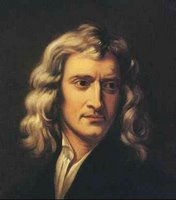
But what about those genuine scientists who are also true-believing creationists? They do exist, but are scarcer than hen's teeth (themselves an evolutionary throw-back), so creation believers make do with anachronistic examples such as Isaac Newton: “Sir Isaac Newton was a firm believer in creation and the Bible.” But Sir Isaac was dead and in his grave for more than 66 years before Darwin was born. Pray tell, how could Newton have been anything other than a creationist?

Sarah then discusses the eye, proclaiming it as a perfect example of God's handiwork. She scoffs at claims that the human eye is wired backward (citing evolutionist Frank Sindler: “As an organ designed and created by an infinitely wise deity, the human eye in inexcusable.”) She explains that God created our eyes the way he did to protect the photoreceptors by setting up the retina in an orientation the critics call “backwards.” This is all very nice, until you realize that eyes come in dozens of different forms in nature. If our eyes are perfectly designed, then the eyes of invertebrates are the backward ones. Something is terribly wrong—and it's the idea that all of these things were carefully designed.

In addition to eyes, hearts are also obviously designed and therefore impossible in terms of evolution. Sarah seems to think that the variation in the number of chambers (from 2 to 5) is evidence for God's creation of different species. “How could this happen under evolution?” asks Sarah, offering the argument from incredulity.
With these examples, one can see how creationists and evolutionists take the same facts and come up with different conclusions in order to support their religious perspective....

This, therefore, is not a debate on which scientists are right; it is a debate on which religion is true and which is false. Evolution vs. creation is now a debate over whether man is inherently good or bad, if he needs a Savior.
Remember, evolution is religion. Ken Ham says so.

Evolution and other bad things

Our third prize winner is Josiah Magnuson, an apple-cheeked 14-year-old homeschooled kid from South Carolina. (That homeschooling sure is a common denominator, isn't it?) His ambitious topic is nothing less than Let Freedom Ring: Life, Liberty, and the Worldview Wars. Unlike Sarah, who defines evolution in terms of apes and men, Josiah construes “evolution” very broadly, as a stand-in for just about everything that is wicked and ungodly in the world. Even these few excerpts will challenge your ability to tally all the ways in which evolution is a bad, bad thing—as well as a “worldview” opposed to God. Josiah devotes the second paragraph of his essay to a word from his sponsor, the oracular Ken Ham:

As Ken Ham, a leading proponent of the creation science movement has written: “Secularism, with its moral relativism, is in direct opposition to Christianity and its absolute morality. The battle is between these two worldviews: one which stands on God's Word and one which accepts man's opinions.”
Josiah then cites the statement in the Declaration of Independence that “All men are endowed by their Creator with certain unalienable rights,” and concludes “Thus, freedom depends on which creator we believe in.” Obviously.

Josiah explains that after Adam and Eve failed their test in the Garden of Eden, the Ten Commandments were issued to govern mortal human life (mortality having been imposed as punishment for disobedience) and government was ordained by God to discipline those who violate the commandments.
Rulers exist to punish wrongdoers and thereby protect rights.

However, violating others' rights is inevitable for natural men, which is where the salvation message comes in. The grace of God through Christ's atonement makes it possible for a Christian to respect others' rights, and God's rights, as contained in His Law....

Societies based on God's Creatorship should thus be free, republican organisms, thriving and happy in a liberty based on the presence of absolutes and rights. Is that the case? Let us examine creationism in history.
Josiah appears to believe that only Christians are empowered to respect the rights of others. If that's true, he must be quite afraid of anyone who does not believe as he does. After all, they live to do evil. (Perhaps we should round them all up.)

Josiah recounts the biblical account of Noah's flood, although without a word about God's penchant for large-scale slaughter, and explains how the diversity of human languages arose as punishment for the hubris of the builders of the Tower of Babel. It's all in the Bible, dutifully footnoted by Josiah. (He has a lot of footnotes, thirty-three in all; he really should have been the grand prize winner. My favorite footnote is the one about the Tower of Babel having been designed to withstand God's judgment. It says, in full, “Various legends from around the world.” That's scholarship for you.)

And what happened after the confusion of languages at Babel? It's time to pay tribute to the either/or world of dichotomy:
Two lines of thought were developed; one affirming the existence of a supreme Creator, the other formulating a relativistic pagan philosophy with a basis in naturalism.
Just two lines of thought, pro-God and anti. Josiah identifies the Creator followers as including Britons, the Hwang-Ho Chinese, Abraham's clan, several Native American tribes, and some Greeks. The bad guys? Those include Sumer, Assyria (soon, however, to do God's work by punishing the ungrateful Israelites), Egypt, Babylon, and the Hittites. Josiah claims that the Creator-based tribes began with a patriarchal structure and “Eventually, many became surprisingly republican.” I think Josiah forgot to capitalize that last word, and I wonder if he meant to include Native Americans in that statement, but perhaps Ben Nighthorse Campbell is an example. I'm pretty sure the Britons are excluded. (God save the Queen!)

Israel, of course, went the other way, choosing to have a king, although “God objected to a monarchy for Israel, citing the probability of over-taxation, forced labor and army service.” That's right, God quoted the crawl-text from the beginning of Star Wars: The Phantom Menace at the tribes of Israel, but they ignored him anyway and crowned Saul as their sovereign. God then had no choice but to call on Assyria and Babylon to despoil the lands of his Chosen People and enslave them. It's tough love.
Perhaps the most well-known ancient republic was Rome. This nation seems to have been founded on the principle of the Creatorship of a Supreme Being, although other gods were later added.... [A]s long as the people were moral and held their rulers accountable, it prospered.

It may be that the rise of every free government in history can be attributed to a revival of belief in a supreme Creator and absolutes.

Even Constantine's nominal Christianity brought a wave of religious freedom and restoration of power to the Roman Senate.

The Protestant Reformation preceded the Dutch and German Revolutions.

The Puritan and Separatists movements preceded the English Revolution.

The Great Awakening preceded the American Revolution.
And the Huguenots preceded the French Revolution, and the mad monk Rasputin preceded the Russian Revolution, but those are clearly invalid post hoc arguments and don't count.

It's time for Josiah to introduce the true villain of the piece. Prepare to hiss and boo, for this is a scary villain indeed.
Unfortunately, Evolution teaches that there are no absolutes. Instead, it declares the universe to be one of change and chance, continuously morphing all its inhabitants and their ideals to match the need of the “fittest” race to survive and dominate. Even the idea of fitness eventually becomes ethereal, for evolution has no prior intention of what fitness should be. “Fitness” is whatever is convenient to the perceived master race.

Jesus H. Christ on a crutch! Where did that come from? Visions of social Darwinism are skipping through Josiah's troubled mind, suggesting that science's natural selection is no different from Naziism's racial pogroms. (It's a damned shame that Darwin's reference to “favored races” continues to be read in terms of the different races of humanity, rather than as an old-fashioned description of competition among variant species. I suspect some people who actually know better continue to promote this misunderstanding because it suits their war against naturalistic science.) Josiah continues his sorry (but award-winning) diatribe:
Dictatorship exists where one person is allowed to make any decision whatsoever. However, in the evolutionary idea of it, the dictator is not at all “allowed” to be dictator, but becomes one by nature of intrinsic supremacy. Individual sovereignty and freedom evaporate.

Democracy exists where the majority of the people may make any decision whatsoever. If the individual is not a part of the fit Majority, he may be eaten alive. Democracy, the absolute rule of the people, is not utopia. Individual sovereignty and freedom evaporate.

In short, government as viewed from the evolutionary perspective creates itself, makes its own rules, and exists to dominate in whatever way possible. If the State sees fit to grant limited liberty to its weak, scrawny, less-evolved subjects, it is only to make them fall at its feet. The State thus empowers itself further. This almighty “fit” State does not exist to protect, but to subdue.
Our only hope is to merge church and state as quickly as possible, so that the loving grace of church rule will mitigate the state's awful tendencies toward tyranny, especially that problem with democratic cannibalism. (Speaker Pelosi must solemnly pledge that the House cafeteria will not offer tasty unfit humans as live snacks under her leadership. They should at least be cooked.) World history teaches us that theocracy is best.

Would someone please freshen up Josiah's Kool-Aid? He's drunk deep and his cup is empty.

Let Freedom Ring concludes with a breezy catalog of abominations that adhered to the evolutionist line. Josiah cites the city state of Athens, which descended into chaos “after its acceptance of the worldview of Evolution” (I didn't know that; did you?); the Roman empire (not at all as nice as the Roman republic, although blessed with centuries of success despite God's abhorrence); the Catholic Church, which “claims to be a ‘Christian’ religion,” although it is “a dictator over people's consciences and even thoughts” (totally unlike any Protestant sect, that's clear); and the French Revolution, which slaughtered many “pastors and republican philosophers” (to the cheers, no doubts, of the evolutionists lining the streets leading to the guillotines).
Many of the dictatorships of the 20th Century were not only founded on atheism or lawlessness, but blatantly designed from Darwinian Evolutionary positions.
Could we please have a footnote for that, Josiah? Please?

He tries to document that insidious claim, but fails in a way that is perfectly understandable. We can't judget Josiah by the standards we would apply to an adult. He's a young man, well indoctrinated in the tenets of his creationist worldview, and his scholarship is immature and unformed. He innocently relies on secondary sources (as most of us must, especially outside the fields of our particular expertise). Josiah therefore trustingly cites Sir Arthur Keith's statement that Hitler was an evolutionist, “[a]s quoted by Carl Wieland, The Blood-Stained Century of Evolution.” Well, that sounds like a dispassionate scientific treatise, doesn't it?

Josiah is probably an unwitting quote-miner when he follows Wieland in repeating only the first sentence from a paragraph in Evolution and Ethics, a book that Sir Arthur began to write while World War II was still in progress and which he published shortly after its conclusion. To avoid any taint of quote-twisting, let me give the paragraph in its entirety, making it clear that Sir Arthur Keith was not declaring the Third Reich to be the epitome of evolution and natural selection. In fact, Sir Arthur makes clear that, in his view, Hitler's regime was a distortion of evolutionary principles, both misunderstood and misapplied:
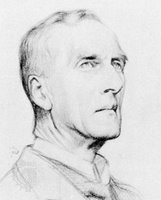
The German Führer, as I have consistently maintained, is an evolutionist; he has consciously sought to make the practice of Germany conform to the theory of evolution. He has failed, not because the theory of evolution is false, but because he has made three fatal blunders in its application. The first was in forcing the pace of evolution among his own people; he raised their warlike passions to such a heat that the only relief possible was that of aggressive war. His second mistake lay in his misconception of the evolutionary value of power. All that a sane evolutionist demands of power is that it should be sufficient to guarantee the security of a nation; more than that is an evolutionary abuse of power. When Hitler set out to conquer Europe, he had entered on that course which brought about the evolutionary destruction of Genghis Khan and his Mongol hordes (see Chapter 34). His third and greatest mistake was his failure to realize that such a monopoly of power meant insecurity for Britain, Russia, and America. His three great antagonists, although they do not preach the doctrine of evolution, are very consistent exponents of its tenets.
Check it out, Josiah. Sir Arthur says he views Hitler as a deliberate evolutionist (which others might well dispute), but that Hitler was unsurprisingly outcompeted for survival because of his failure to grasp the nature of evolutionary theory. He thus put his entire country's survival at risk. One doesn't have to agree with Sir Arthur Keith to see how shamefully his statement is misused by creationists to set up Hitler as a model of evolution and natural selection—unless you mean a model of what does not survive.

Here's a paragraph from Josiah's concluding section. Those of us who pray might wish to send up petitions that Josiah will some day achieve enlightenment. Secularists like me will have to content ourselves with opposing Josiah's fellow travelers whenever they run for office, whether school boards or legislative bodies, in hopes of protecting the freedoms that we enjoy and that they truly do not understand.
The worldview of Evolution indeed grants a type of freedom. It is a freedom for Stalin to drive a sledgehammer into Trotsky's head. It is a freedom for Hitler to force millions into death camps. It is a freedom for Mao to torture and kill anyone who would even dare to have his hairdo.
John 11:35.

Tuesday, November 14, 2006

The Pelosi Project

Ha, ha! What did I tell you?

KSFO's Melanie Morgan has clambered from the fetid swamp that is her morning talk show and taken her anti-Pelosi campaign to the big time—Hannity & Colmes. I'm sure she felt right at home. Last week she ranted on the air about the “dirt” that would keep Pelosi from ever becoming Speaker of the House. (You can see my original post on Morgan's threat immediately below; I wasn't too far off in predicting what Morgan would do.) The loonies at Free Republic are trying to push the story into the mainstream media:
KSFO's Melanie Morgan says illegal aliens are working in Nancy Pelosi's vineyard
Hannity and Colmes ^ | 11-13-06 | dfu

Posted on 11/13/2006 7:53:56 PM PST by doug from upland

NOTE: if anyone saw the show, please report

YOUTUBE PRESENTATION WITH INFO ON HER VINEYARD AND HER FAILURE TO HIRE UNION LABOR

I don't know if it is on the FOXNEWS site yet, but something potentially very important occured on Hannity and Colmes tonight.

KSFO's Melanie Morgan was a guest and exposed Nancy Pelosi, speaker in waiting, as employing illegal aliens to work on her wine vineyard in the Napa Valley.

If the charges are proven, how can the House possibly allow Pelosi to become speaker? Draining the swamp, will mean draining her.

As you might recall, Linda Chavez had to withdraw her nomination as Labor Secretary after it was revealed that she had hired an illegal alien in the 1990s.

FReepers, make the mainstream media cover this.

Oh, dear! Am I helping the Free Republic wackos and Melanie Morgan distribute a smear about Speaker-presumptive Pelosi? Yeah, right. Like a posting here constitutes major publicity. No, I'm merely pointing out how lame their efforts are. So very sad.

(The following was originally posted on November 10.)

Another right-wing delusion

I agree that it is unseemly for the victors in a hard-fought contest to gloat over the fate of their defeated opponents. Therefore I was pleased that Nancy Pelosi and Harry Reid were gracious in their acknowledgments of the Democrats' success in taking over both houses of the U.S. Congress. I, on the other hand, can gloat all I want.

The day after the election, I radio-surfed among the various talk-radio stations (AM dial, of course) in northern California. Depending on location and time of day, I can usually pick up the Air America affiliate in Sacramento (KCTC, AM 1320) and the regional outlet for the Stephanie Miller Show and other Jones Radio progressive programs (KSAC, AM 1240). That's right—California's state capital has two liberal talk-radio stations. Bouncing back and forth between the two stations on November 8 gave me a heady dose of unreserved celebration and gloating. Yay! Take that, right-wing suckers!

Speaking of right-wing suckers, I can also pick up the highest profile regional source for reactionary rant radio, KSFO AM 560. Stuck in the belly of the beast in the Bay Area, struggling desperately to remain afloat in a region awash with dreaded “San Francisco values,” the conservative talkers on KSFO are led by local luminaries Lee Rodgers and Melanie Morgan. Since a gloat-fest can only benefit from a dash of Schadenfreude (not that I was feeling much Schade about my unrestrained Freude), I included KSFO in my post-election radio surfing.

Rodgers and Morgan were already trying out the now-official right-wing excuse for the Democratic romp (“The Democrats didn't really win—the Republicans lost; conservatives actually won a moral victory while the GOP took a tumble”). Morgan, however, was also her usual combative and aggressive self. Instead of lying back and acquiescing in the rout of her political allies, Morgan was already planning a counterattack:

She thinks Pelosi can be denied the House speakership.

“I have a lot of dirt on her,” said Morgan, “and I'm not afraid to use it. Nancy Pelosi will never be speaker.” (I'm quoting from memory since KSFO does not archive its broadcasts, but this is an accurate reconstruction of the content of her on-air remarks.)

I grinned at yet another example of Morgan's hubris. The week before she and her political group, Move America Forward, had taken their own shot at creating a “November surprise.” By all indications, Morgan really thought it would have an impact on the election. Now she was sharing another delusion of grandeur.

Using my own gigantic brain, I can speculate on Morgan's brilliant plans to head off a Pelosi speakership. Some aspects of this pipe dream have already been passed around in the redder portions of the blogosphere, although the size of the Democratic victory has muted their voices. The theory has been that several members of the Democratic caucus (particularly those newly elected in recently Republican districts) might be uncomfortable—or even balk—at voting for a dreaded San Francisco liberal as their leader. Here's an apposite quote from Free Republic:
Wouldn't it be sweet if those “Conservative” dems wake up tomorrow and see the light and defect over to the Republicans???

Yeah, that's going to happen.

First of all, Pelosi is a very smart woman who understands the two roles that she plays. She is the liberal representative of a liberal congressional district. That's an important role that she fills very well, giving her constituents a voice and a vote in the U.S. House of Representatives. She is also the leader of the Democratic caucus in the House. As the leader of the Democrats, Pelosi's role is to keep the caucus together and to see that it prospers (as indeed it has under her leadership). She therefore works pragmatically with people who do not fully mirror her district or her political philosophy. Even the Democrats from the reddest districts know how much Pelosi contributed to their victories by keeping the troops focused on the key issues. They will unhesitatingly vote to make her Speaker.

Morgan and others will try to resurrect the failed “San Francisco values” attack on Pelosi, no doubt with the addition of the old whispering campaign against the Speaker-presumptive. For example, did you know she's wealthy? That's supposed to expose her as a hypocrite because wealth is obviously a Republican family value. And did you know that the Pelosi family owns a vineyard whose workers aren't unionized? This supposedly makes her a union-buster, contrary to her avowed support of the labor movement. Since no evidence of anti-union activities has ever been offered (and you can be sure the Republicans would serve it up if it existed), the absence of a union at the vineyard probably means the workers are well compensated and have never seen the need to organize. That's a far cry from being a union-busting hypocrite.

That's the sort of “dirt” the right-wing thinks it has on Nancy Pelosi.

We can expect to hear more big talk from Morgan before the Democratic caucus makes it official and confirms Pelosi as their leader and future Speaker of the House. And whatever Morgan says, I'm sure she'll be shooting blanks.

As usual.