Showing posts with label atheism. Show all posts

Saturday, July 18, 2015

All in this together

Denying individuality

We live in an age when everyone, whether enthusiastically or grudgingly, gives at least lip service to diversity. Most people acknowledge diversity as a strength, others may claim they find it excessively politically correct, but a surprisingly large number of people seem to forget all about it in certain venues. I notice it all the time, like when it happened multiple times at a series of seminars earlier this year. How often have you heard speakers address groups with remarks like these?
Sometimes you just need a beer, right?
No. Never. I belong to the approximately 13 percent of the U.S. population that eschews alcohol. The man extolling the virtues of beer had about one hundred people in his audience, so about a dozen people were left out of his all-encompassing declaration. He probably never considered saying, “You know, I really need a beer sometimes.” Even the handful of nondrinkers could have chuckled in sympathy with that remark.
Last night, of course, we were all watching the game!
No, I wasn't. I'm not even sure what game you're talking about. It's even worse when the speaker wants us to cheer for a particular team. Not everyone is fascinated by sports teams.
Just think back to your senior prom!
I didn't bother to go. I didn't bother with the junior prom, either. Not my thing.

Then there's funerals. Nothing beats the last rites for unleashing mandatory group-think, whether you're inclined to go along or not.
We can all take comfort in the thought that she's in a better place now. She and her late husband are together again.
People try to coerce you into prayer. They inflict inane pieties on you and prate about an afterlife. It is, of course, the maximally inappropriate venue to insist on dissent. No individuals are allowed.

Friday, May 23, 2014

God's not at all well

The belabors of Hercules

Yes, I slipped in to see God's Not Dead the other day, looking about suspiciously at my fellow movie-goers. It soon became apparent they were there for the Kool-Aid. When Josh Wheaton asks Professor Radisson, “How can you hate someone who doesn't exist?”, the guy a few seats over from me went “Oh, yeah!” Because, you know, it was such a brilliant and devastating riposte to the professor's expressions of disbelief. Theists refuse to believe that anyone actually lacks belief in God; atheists are all sort of pretending, I guess.

The movie has already undergone many trenchant analyses and deconstructions and, yes, it really is an awful piece of tripe. Its cloying earnestness seems to me to be unselfconscious, indicating that the movie's creators are genuinely shallow and lacking in the power of self-reflection. Smug certainty has destroyed their capacity for critical thought.

Since there's no great need for me to add redundant criticisms, let me instead offer some points related to my personal perspective as a college professor, the false notes that regularly pulled me out of the motion picture and made me keenly aware that I was watching a religious tract.

Kevin Sorbo depicted Professor Radisson as a self-important authoritarian, a dispenser of “truth” who hates to be questioned. Such professors are not unknown in academia, but they are rare. Most of us like students to think about what they are told, to question dogma and to discuss these matters with classmates and instructors. Of course, the movie could have merely chosen to depict one of these curmudgeonly professors as a device for conveying a lesson—except in this case it's less of a lesson and more of an unrelenting harangue.

I nearly laughed out loud at the end of the scene involving the first day of philosophy class. The professor adds Bertrand Russell's Why I am not a Christian to the reading list for the next session. Apparently the students had already been assigned David Hume on “The Problem of Induction” (presumably an excerpt from An Enquiry Concerning Human Understanding) and Discourse on the Method (Discours de la méthode) by René Descartes. How often does the class meet? This is a daunting reading list even assuming the students have a week in which to plow through it. Perhaps Radisson had distributed a syllabus in which only certain pages were indicated for the week's reading, but his addition of Russell to the list carried no such limitation. I can imagine the screenwriter congratulating himself on using Russell's book as Radisson's shot across Wheaton's bow: “Heh, heh. This'll raise the audience's hackles! Even though most of them won't know who Russell is, the title will do the trick!”

No one has commented, to my knowledge, on Radisson's office. Although it's made clear that he is considered the prohibitive frontrunner for the position of department chair, he has yet to achieve that status. Nevertheless, his office is large enough to serve as a hangar for a 747 and his desk is long enough to land jet fighters. Radisson must work for one of the most prestigious and most richly endowed universities in the western world. It's like those television sitcoms where impoverished young people live in deluxe apartments while subsisting on ramen and cheap beer. I was most impressed.

Dean Cain's character could have been ripped from the pages of an Ayn Rand novel. Unbelieving and self-absorbed, “Mark” has no time for altruism. He is a “superman” who rapidly sheds any inconveniences that arise between him and his goals. His girlfriend develops cancer? Ex-girlfriend! His mother descends into the fog of Alzheimer's? Time to forget her just as she's involuntarily forgotten him! (Of course, when Mark is hectored by his sister into paying Mom a visit in the nursing home, Mom manages to emerge from her dementia just long enough to deliver a lucid little sermonette to shame her unbelieving son. A miracle!)

The subplot depicting the Arab girl who converted to Christianity was especially disturbing. Of course, her Muslim father beat her and ejected her from the house. We got to see him cry afterward, so I imagine the movie producers felt they had gone the extra mile in humanizing the devout believer in a false religion. (See, kids! This is how you behave when you follow Allah instead of Yahweh!) I managed not to hoot aloud when a close-up revealed that the girl had been listening to lessons recorded by Franklin Graham. Franklin! A pale imitation of the real thing, but apparently good enough to cost a young woman her family and her home.

I won't dwell on the ghoulish ending, which was embarrassing in the extreme. When the preachers were crouching over the dying Professor Radisson, I was half-expecting them to sprout vampire fangs, they were so eager to sink their teeth into him. Instead I want to point out the ridiculousness of the final scene in Radisson's philosophy class. Since it was foreordained that Wheaton had to win, humiliating his atheist professor, it was impossible that the end of the debate would offer any surprises. And it didn't. Right on cue, the Asian boy who had befriended Wheaton was the first to rise to his feet to declare “God's not dead!” and Wheaton the winner. But then every single student stood up and joined the chorus. Really? Every student? I watched closely, looking for the students who would stubbornly keep their seats, rolling their eyes at their suddenly faithful classmates—all of whom had been willing only a few weeks before to scrawl their names on God's obituary. I didn't see a one.

Fake, fake, fake. Nothing short of a fire drill or the end of class will get every student to pop up from his or her desk. My neighbors in the movie theater may have noticed I was chuckling, but so were some of them. Perhaps they thought I was participating in their joy at Wheaton's David-vs.-Goliath triumph.

Nope.

Friday, April 18, 2014

Pandora's book

Things that you're liable to read in the Bible

Protestants often pride themselves on being “Bible-believing Christians” and excoriate Catholics for relying on clerical authority instead. There are two good reasons for regarding this Bible-centric position with skepticism. For one thing, Catholics are exposed to readings from the Old Testament and New Testament every time they go to mass. For another, despite the noisy evangelists who love to spout chapter and verse, Protestants are less familiar with the Bible than they think they are—or think they ought to be.

Some entertaining anecdotal evidence to this effect was presented in the Sacramento Bee in an article on Wednesday, April 16. One of the state capital's Lutheran churches has embarked on a program designed to guide its members through the entire Bible in three months' time. There have been surprises:
It’s been an eye-opener: The violence—the sheer level of bloodshed in the Old Testament—has taken many of them by surprise.

“Your Sunday school teachers didn’t tell you about that,” associate pastor Leslie Welton said to a recent class of almost two dozen people.
It's another example of Christians not being fully aware of what their holy book contains. Cherry-picking Christians can be shocked when they try to plow line-by-line through the text of scripture:
“How many of you are shocked by the blood and gore and carnage?” asked Welton.

There were nods of agreement around the room: Page by page, chapter by chapter, class members are deeply shocked. With its betrayals, infidelities and lessons stubbornly unlearned, its epic levels of carnage and vengeance, this wild ride through the Old Testament is not the Bible they expected.
What is a good apologist to do? The preferred approach seems to be “Look over there!”
The Old Testament also depicts a world in which God’s grace shines amid the violence
Really? That's the best you can do? God's grace shines amidst all of the God-induced violence?

Apparently the God of genocide (Deuteronomy 20:16-18; Joshua 10:40; 11:10-15, Hosea 13:16, 1 Samuel 15:2-3) gets a pass because he later cleans up his act by sending a merciful savior to bestow peace and redemption on humanity—that is, when the messiah isn't himself threatening war and dissension (Matthew 10:34, Luke 14:26).

Their leaders will do their best to put the Bible-readers at ease, but even in these first stages of the Bible-reading project we see how the Bible itself is one of the most effective cures for religiosity. Read the Bible! It's an excellent self-exposé.

Saturday, January 07, 2012

Broken engagement

Pining after the “old” atheists

The National Catholic Register is a century-old newspaper that was recently acquired by the Eternal Word Broadcasting Network (EWTN): “The acquisition of the Register is the latest in EWTN's efforts to expand its news presence in the global Catholic digital and multimedia market.” As a result, EWTN Radio has added Register Radio to its broadcast schedule, a weekly program hosted by Thom Price and Tim Drake. On January 6, 2012, Register Radio featured the observations of Father Robert Barron on its “Media Watch” segment, wherein mass media treatment of the Roman Catholic Church is examined (and usually found wanting).

Father Barron and his hosts focused their particular disdain on an editorial column penned by New York Times executive editor Bill Keller. Back in August of last year, Keller considered the religious beliefs of the Republican presidential candidates. His words did not please the Register Radio commentators:
Tim Drake: In this August 25 editorial—it was titled “Asking Candidates Tougher Questions About Faith”— New York Times executive editor Bill Keller scrutinized the religious beliefs of the different GOP presidential candidates and he touched on Mormonism, evangelical Christianity, and Catholicism. And in the editorial he likened Catholics' belief in the real presence of Christ in the Eucharist to belief in aliens. He wrote, “If a candidate for president said he believed that space aliens dwell among us, would that affect your willingness to vote for him?” And he later wrote, “Every faith has its baggage, and every faith holds beliefs that will seem bizarre to outsiders. I grew up believing that a priest could turn a bread wafer into the actual flesh of Christ.” And so we thought we would bring on Father Robert Barron with us today to kind of tackle this. Father Barron heads up the “Word on Fire” ministry of the archdiocese of Chicago and is also the creative director behind the new “Catholicism” series, which will be airing on PBS starting September 22. So, Father Barron, thanks for being with us.

Father Barron: Gentlemen, good morning. Thanks for having me on this morning.

Tim Drake: So, first of all, Fr. Barron, what was your reaction to Keller's comments, specifically his description of the Catholic belief in the real presence as baggage?

Father Barron: Yeah, well, it was sadly typical, as you were saying, not just of the New York Times but a lot of the mainstream media. Something I've noticed—you know, I've been following media for a long time—and there's this extraordinary uptick after September 11, I would argue, in anti-religious rhetoric, a tendency to mock religion rather than seriously engage it. I mean, go back to the early twentieth century, and you have the great atheists like Sartre and Camus and company. Well, they engaged religion seriously. They knew they were up against a serious opponent and they disbelieved in God and they didn't like the Church particularly, but they didn't mock it. But now you see after September 11, and the rise of the Hitchens and Dawkins and Bill Mahers and Sam Harrises, you find a shift in tactics. Not even an attempt to understand what the Church means by its teaching, but simply to mock it in the most sort of juvenile way. Sadly, you see it in all the comment boxes and all that on the Internet. People have taken their cues from Hitchens and Dawkins and company and they just sort of dismiss religion with the back of the hand. It's really sad that it's come into, you know, much of the leading mainstream media in the same way. So I'm not really surprised by it. I see it all the time. But it's still, you know, dispiriting and discouraging.

Tim Drake: Yeah, you know, it's interesting. I had never thought, you know, of the sort of the treatment of religion pre-9/11 and post-9/11, but with the rise of the “new atheists” it almost seems like we need a “new apologetics” to kind of respond, don't we?

Father Barron: Absolutely, and I think—I've been thinking about it for a long time—there is a clear watershed at September 11, because what it did, it stirred up in the minds of a lot of people that old Enlightenment Era critique, namely, religion is irrational, therefore it's violent. You go back to Kant and to Schleiermacher and to Spinoza and the leading philosophers of the Enlightenment, that was exactly the argument. Religion is irrational. Therefore you can't really have an argument about it, all you can do is fight about it, which is why religious people tend toward violence. And that old argument from the eighteenth century was stirred up after September 11. People say, well, look, there's these irrational—therefore violent—religious people knocking down the World Trade Center. All religion is like that, you know. So I saw a revival of that. And that's why I think it's no accident that Hitchens and company emerged so strongly after September 11. The difference, of course, is you want people who'll be willing to engage religion seriously, to try to find out what serious religious people actually mean when they use language like, a wafer of bread is transubstantiated into the body of Jesus.
What serious religious people believe about transubstantiation? Why does Fr. Barron think anyone, in the media or otherwise, is puzzled by that? “Serious” Catholics believe that magic happens. It's no big mystery what they believe because the Church doctrine of transubstantiation is very clear: the wafer of bread truly, really, literally becomes the genuine, actual flesh of Jesus Christ himself—except without changing any of its physical aspects. The bread retains its previous appearance, form, and tastelessness. In brief: a miracle without evidence. As I said: magic. And, lacking the least particle of physical evidence, it must be taken entirely on faith. If you're not a believing Catholic, then it's just so much superstitious baggage—to borrow an apt term from Keller.
Father Barron: But I find that there's just an unwillingness on the part of much of the mainstream media even to understand what we mean. It's simply a back-of-the-hand dismissal. That's a problem. And then to your point: Yes, indeed, we need a new apologetics. When I was coming of age, apologetics had a bad flavor. You know, it was seen to be defensive, and it was non-ecumenical, and it was Tridentine and all this, but, you know, what's happened is my generation—I'm fifty—my generation ran out to meet the culture. The culture's good, embrace the culture. Well, I mean, now a large part of the culture has turned against us, with hostility. And so there we are, without any weapons. And so I think, yes, indeed we have to recover the intellectual tradition of Catholicism, which is very strong, and will enable us to meet some of these attacks.

Tim Drake: Yeah, it certainly seems as if the Catholic Church does not receive the same degree of respect that other faith traditions receive. And don't you think that much of that hostility and hatred that is directed at the Church comes from the fact that the Church is one of the only institutions that kind of actually stands for something.

Father Barron: Yeah, Oh, quite right. In some ways it's a back-handed compliment that we get so much attention, you know, so much opprobrium, it's because we're the biggest kid around and, as you say, we actually stand for something. So it is a back-handed compliment that we're still seen as a threat. And it's something I find fascinating, to go back to what I said a few minutes ago, from the Enlightenment on, who is perceived as the great enemy of modernity but the Catholic Church? And so you've seen a revival of that argument. Now as with Vatican II, there were elements of modernity that we can and should reach out to, we should try to engage the modern culture as much as we can, but there are elements of the modern culture that are antipathetic to our program. And it's wrong for us simply to, you know, embrace it all in an uncritical spirit. They've recognized in us an opposition. Okay, good. I'm glad. We are opposed to modernity. In some ways. I think one of the primary ways is modernity loves the mythology of self-creation, you know, that we make ourselves by sovereign acts of the free will. That's a great modern myth: Here I am, an individual with rights, privileges, responsibilities, and I can even create the meaning of my own life. Well, I'm glad the Catholic Church stands against that and I'm furthermore glad that the modern culture recognizes that. They know that we're the enemy of that view. I think we should boldly enter the lists and say, yeah, let's get it on. Let's have a good argument about this.
Fr. Barron fails to recognize that the “ good argument” actually began a long time ago and has been going against his side. His attack on “modernism” is an instructive echo of the Church's long and losing struggle against humanity's slow progress toward rationality. In the Church's formulation, “modernism” is a heresy, much abhorred by popes. Barron joins them in condemning the notion that the meaning in one's life can come from one's own conscious will. In Barron's world, the Church is in charge of doling out meaning. If you don't like it, that's just too bad. Amen?

I don't think so.

Wednesday, March 23, 2011

Another non-miracle miracle

Get well, Allen Wright

I hope Allen Wright beats the odds and experiences a full recovery from the hit-and-run accident that put him in the hospital on Sunday, March 13. He's the teenager who received some previous publicity for his invention of “A Note to God,” an iPhone application that delivers messages to ... well, no one. However, users of the application get to enjoy sharing their prayers anonymously with other believers (and only God will know who they are). It hardly seems necessary to acquire an iPhone app to send God little notes, but what-the-hey, it's a digital age.

Anyway, today's headlines report that Allen is out of the eight-day coma that followed the accident and he is responding—apparently with some comprehension—to family members and medical personnel. It's a very encouraging sign.

But it's not a miracle, despite what some devout people want to believe. Here are some comments posted by believers on the website of the Sacramento Bee:
Miracles do happen...Awesome....


God always has a way of turning a negative situation into a positive one!


My first thought is, "God has answered your letter Allen".


It's a miracle from god that he brought Mr. Wright out of his coma.


to God be the glory! Yes, there is power in prayer. And I guarantee, that every one of you reading this post, would begin praying when ANY family or friend becomes ill or experiences an accident.


That news gave me the chills. What an awesome God we have.


Divine Intervention.
Did the “awesome God” who allowed Allen to wander into the path of a speeding car decide to tidy up his own mess and divinely intervene to restore his victim to consciousness? Did he repent of his plan to take out the boy who was spamming him? The Bee tells a slightly different story. The doctors at Mercy San Juan Medical Center injected Allen with drugs to deepen his trauma-induced coma. It was an attempt to protect the patient by reducing brain swelling, giving him time to heal without suffering the additional trauma that brain-swelling would induce. After one week, the doctors withdrew the sedatives. Within hours, Allen opened his eyes.

Not exactly a miracle, but still an encouraging sign. He then demonstrated that he could respond to questions by sticking out his tongue. Quoted in the Bee, neurologist Kavian Shahi said, “One of the most important things we like to see from patients is whether they follow commands. It indicates they can understand language and react to language. It takes a lot of brain power to do that.”

The Bee reporter asked Dr. Shahi if Wright's awakening was aided by the prayers offered up on his behalf. The doctor gave a discreet response:
“Sometimes I think it does. Sometimes I think it doesn't,” he said. “I don't actively encourage it. But in my opinion, it never hurts to pray.”

No, it never hurts to pray. I encourage all believers to do so regularly. It keeps them out of trouble and out of our way. Praying for Allen isn't going to do him any good, but it might calm the nerves of those who pray. I guess that's good. Sort of.

Allen's brain, which probably still thinks there is a God, may be on the mend. Let's hope so. But I won't bother to pray.


Allen Wright's recovery, whether complete or partial, is certain to be difficult and probably lengthy and expensive. A fund has been set up: Allen Wright's Foundation for a Better Life, Wells Fargo, 6047 Sunrise Boulevard, Citrus Heights, CA 95610.

Sunday, February 20, 2011

Forrest in Sacramento

Darwin Day 2011

California's state capital observed Darwin Day on Sunday, February 13, 2011, at the La Sierra Community Center in Carmichael. The event was co-sponsored by several Sacramento-area organizations, including Sacramento Area Skeptics (the sponsors of last year's California tour by PZ Myers), the departments of biology and anthropology at Sacramento State University, the departments of astronomy and physics at Sacramento City College, Atheists and other Freethinkers, and local chapters of Americans United for Separation of Church and State, and the American Civil Liberties Union.

There were about two to three hundred people in attendance. They were welcomed by Mynga Futrell, co-chair of the organizing committee, who made a special point of emphasizing that the event was in honor of Charles Darwin and not a celebration of atheism. It was apparent that the organizers were at pains to make religious people feel welcome at the event, even at the cost of making them uncomfortable by stressing so earnestly that they were among friends. The Unitarian Universalist Society of Sacramento had a display table in the back of the hall, but no other religious organizations were visible. Perhaps the outreach to theistic evolutionists will succeed in drawing other sects to next year's Darwin Day, but it's not an easy task to construct a big-tent approach to Darwin Day when so many of Darwin's admirers consider him the man who made God an unnecessary hypothesis in biology. I expect that Darwin Day will continue to be dominated by people for whom religion is at best a cultural artifact and at worst the mortal enemy.

The master of ceremonies was Liam McDaid, the astronomy coordinator at Sacramento City College. McDaid made for a high-spirited emcee, lapsing occasionally into an Irish brogue when he deemed that the occasion warranted. He gave a laudatory introduction to the afternoon's featured speaker, Dr. Barbara Forrest of Southeastern Louisiana University, professor of philosophy in the department of history and political science, and co-author (with Paul Gross) of Creationism's Trojan Horse.

Back to the Future: Or, What Can We Learn from Louisiana's 2008 Science Education Act?

Dr. Forrest had a front-row seat in her home state of Louisiana as right-wing forces converged on Baton Rouge to push a creationist agenda through the state legislature and onto the desk of the Bayou State's new creation-friendly governor. Her Darwin Day presentation outlined the events and players that produced the nation's first anything-goes science curriculum for public schools.

The Louisiana Science Education Act is one of those legislative measures that supposedly promotes “critical thinking,” but only in the case of evolution or climate change or some other topic disfavored by the Christian right. It never seems important to fret about the lack of statutory critical-thinking guidelines in matters such as the roundness of the earth or the heliocentric nature of the solar system (but perhaps we just need to wait a little longer). It's evolution that must always be called into question and treated with arch-skepticism.

As Forrest pointed out, creationism has evolved over the decades under the pressure of natural selection. As one ploy after another fails, creationism adapts to the new circumstances and changes in response. The foes of evolution, however, never seem to notice the irony of their adherence to Darwin's model. Forrest chose her “Back to the Future” title because Louisiana had enacted an overtly pro-creationist measure in 1981. The U.S. Supreme Court famously declared the bill unconstitutional in Edwards v. Aguillard as a violation of the separation between church and state. Having learned at least part of the lesson of the Edwards decision, creationists had redirected their efforts in the 2008 bill. Under the banner of “academic freedom,” they abandoned the mandating of creationism and focused on permitting it.

In the case of the Louisiana Science Education Act, the strategic retreat worked. The creationists crafted a permissive approach that empowered public school teachers to supplement state-approved science texts and instructional materials with whatever outside materials the teachers might choose. This opened the door wide for an influx of creationist literature that creation-minded science teachers (an unfortunately large minority among public-school faculty) could distribute to their students and use as the basis of anti-science instruction. As Forrest phrased it, under the Louisiana Science Education Act, a creationist teacher “can use whatever she wants until she gets caught.” To make matters even worse, the anti-evolutionists managed to co-opt the complaint process provided by the new legislation. Under the regulations approved by the Louisiana Board of Elementary and Secondary Education (BESE), parents who complain about inappropriate classroom materials will find themselves dealing with a review process stacked in favor of the creationists.

The Louisiana Science Education Act of 2008 was not made out of whole cloth. It had its origins in model legislation promoted by the Discovery Institute. The DI's Casey Luskin was much in evidence during the progress of Senate Bill 733 through the enactment process (the vote was unanimous in its favor in the state senate and 94 to 3 in the state house of representatives) and its arrival on the governor's desk. When Gov. Jindal was supposedly pondering the measure, science organizations across the nation sent him messages exhorting him to veto it. Even his former biology professor, Dr. Arthur Landy, issued an earnest request that Jindal not make it more difficult for Louisiana students to become doctors by debasing their science education (Jindal once planned to go to medical school). The governor ignored them all and did not bother to respond to their arguments.

Although Gov. Jindal signed the bill without any publicity on June 25, 2008, someone apparently tipped off the Discovery Institute that he was about to approve SB 733. The DI posted a victory declaration on its website within minutes of the announcement from the governor's office that SB 733 was now state law. (It now resides on the Louisiana books as Act 473.)

In an appearance on Face the Nation shortly before signing SB 733, Jindal offered TV viewers a word-salad mash-up of nouveau-creationist talking points:
I don’t think students learn by us withholding information from them.… I want them to see the best data. I personally think human life and the world we live in wasn’t created accidentally. I do think that there’s a creator.… Now the way that he did it, I’d certainly want my kids to be exposed to the very best science. I don’t want any facts or theories or explanations to be withheld from them because of political correctness.
“Withholding information”? “Political correctness”? These phrases are mere screens for smuggling creationism into the public school classroom under the guise of promoting “the very best science.” Jindal was flying the combined banners of “teach the controversy” and “academic freedom.” Scientists told him very clearly that these framing devices were a distortion, but he chose not to listen to them. Jindal is, after all, the anointed one. Literally. As Dr. Forrest pointed out, Jindal went through a formal laying-on-of-hands ceremony in 2007 at a Christmas gathering of the Louisiana Family Forum, a group that vigorously lobbied for SB 733 the following year.

Despite the enactment of the Louisiana Science Education Act, creationism has suffered a few recent setbacks. First of all, and perhaps most significantly, BESE approved mainstream scientific textbooks for use in public school classrooms, beating back an attempt by creationists to forestall the adoption of evolution-based biology texts. In addition, creationists posing as science experts have been unmasked as frauds and exponents of discredited and outlandish theories. (Of course, this has seldom discouraged them in the past.)

Forrest stated that she and her colleagues at the Louisiana Coalition for Science will be alert to future attempts by creationists to exploit Act 473 and in particular will assist parents who complain about anti-scientific materials being used in science classes. The deck has been stacked against science in Louisiana, but pro-science forces are vigilant and fighting back. Forrest cited the example of Zachary Kopplin, a high school senior in Baton Rouge who has taken on the ambitious project of repealing the Louisiana Science Education Act. Zachary has his work cut out for him, but he is working in earnest to restore science education's credibility in his home state. Forrest referred interested parties to Zachary's website.

Dr. Forrest's talk was followed by a Q&A session and a birthday party for Charles Darwin, complete with birthday cake. Longtime participants in Sacramento's Darwin Day observations seemed to agree that the fourteenth annual event in the state capital was one of the most successful. It was Dr. Forrest's first visit to Sacramento and her reception was both friendly and enthusiastic. At least one fan was seen getting her autograph on his hardback copy of Creationism's Trojan Horse.

Resources

The National Center for Science Education has posted a video of Barbara Forrest's talk as she delivered it on April 24, 2010. The video is marginal and the audio is poor, but the content closely parallels Forrest's presentation at Sacramento's Darwin Day.

Update: Dr. Forrest's presentation in Sacramento is now posted on the NCSE's YouTube account: Darwin Day 2011.

Sunday, May 02, 2010

Fun with trolls

Basket cases

The Internet is a wonderful gift to the mentally deranged. It enables them to share their warped perspective and grandiose delusions with the world. PZ Myers highlights a special case over at Pharyngula. John A. Davison is a sorry-ass crackpot who pelts PZ with e-mail about his cranky collection of “science” essays. It's another idiot who thinks he's a genius.

I'm currently having just a little bit of fun with a similarly loopy—but less coherent—nutjob whose self-regard has to be experienced to be appreciated. Let's call this fellow “Smith” for the sake of discussion. His reasoning skills are orthogonal to reality. For example, check this out:
DOES ATHEISM HAVE A FUTURE?

AND THE ANSWER - NO!

Shermer - Harris - Myers - Dawkins - Randi VS. NOSTRADAMUS - EINSTEIN - SMITH

you're ANNIHILATED!
It's another idiot who thinks he's a genius, ranking himself with Einstein. The Nostradamus comparison I can almost see, especially if you equate obscurantism with delusion (and I suspect Smith can't tell the difference).

It's just sad that Smith thinks Einstein was a theist. A regard for Spinoza's concept of god as the embodiment of nature does not make one a believer in any traditional sense of the word.

Too bad for Smith.

Each time he weighs in with one of his irrational rants, I smile and gently delete it. No doubt he chuckles mischievously as he reposts his nonsense time and again, but it's all for naught. He posts and chuckles. I delete and laugh.

Ha, ha, “Smith.” See how I mock your self-regard?

Saturday, January 30, 2010

PZ does Rocklin

The Q&A at Sierra College

Three out of eight. That's how many of the talks by PZ Myers I attended during his California tour. PZ's presentation on Thursday evening at Sierra College in Rocklin (just north and east of Sacramento) was his valedictory. He chose for this occasion a slight variant of the presentation he gave his UC Davis audience last week. Ray Comfort was once again front and center as the embodiment of creationist stupidity, providing an all-too-easy target and generating lots of laughs from a capacity crowd in 110 Weaver Hall. (A sign on the wall said the lecture hall could hold no more than 133 people, but I suspect that a few more than that were actually present.)

While PZ's two-lecture repertoire for his “Complexity and Creationism” tour produces a series of similar talks for those of us who attended multiple events, each venue generated its own unique Q&A sessions with the audience. In my reports on the California tour, I've concentrated on this aspect of the presentations. After a brief recap of the main body of PZ's presentation at Sierra College, I'll give my account of the audience reaction. In my opinion, it was the most spirited of the three events at which I was present, although the number of attendees was also the smallest.

The main event

After a Mr. Deity clip, which PZ has been using at his stops to settle the crowd, Brett Ransford of Freethinkers of Sierra, the local sponsor of PZ's appearance, introduced the evening's speaker. Brett recounted PZ's expulsion from a screening of Expelled while Richard Dawkins was permitted to stroll into the movie theater unmolested. Upon taking center stage, PZ quipped that he was pleased to have been regarded as scarier than Dawkins and launched his presentation.

“Creationists have no good arguments for anything,” declared PZ, providing his audience with the central theme of his talk. He cited the example of Geoffrey Simmons, M.D., who has written a book titled Billions of Missing Links, only to demonstrate in a radio debate with PZ that he was completely ignorant of the existence of a rich trove of whale ancestors. PZ freely admitted that he was rude enough to label Dr. Simmons as ignorant (the usual definition of lack of knowledge, after all), which caused a lot of gasping and clutching at pearls among the radio station's delicate religionists.

It turned out that Simmons had limited his research on whales to a perfunctory reading of a Scientific American article on cetacean evolution—although apparently not turning enough pages to discover that the magazine had included a lengthy list of the whale's extinct ancestor species.

“That's just the standard creationist approach to research,” said PZ.

Several of PZ's slides served up jaw-droppingly stupid statements by Ray Comfort, famed banana connoisseur and the star of the evening's creationist freak show. These included Comfort's claim that Darwin thought human males and females had evolved independently, his similar statement about elephants and dogs.

It doesn't help Ray Comfort's credibility that his introduction to a special giveaway edition of Darwin's Origin of Species was a cut-and-paste job that included outright plagiarism.

PZ also touched on creationists' excessive literalness. (Well, they are rather hung up on “the Word.”) Michael Behe sees “little trucks and busses” in biological systems. “I mean, literally,” he says. In a similarly wacky vein, Ken Ham's Creation “Museum” sports signs boasting that the facility presents a “literal interpretation” of the Bible story of Genesis.

Literal interpretation? “Those are two words that don't go together,” said PZ.

Creationist Jerry Bergman once debated PZ over the question of whether intelligent design ought to be taught in school (presumably as a legitimate subject and not as a good example of pseudoscience). While PZ argued that ID creationism lacks the theoretical framework and evidence that science requires, Bergman responded that you don't need a theory—all you need are facts. (Huh?) Besides, according to Bergman even a carbon atom is irreducibly complex (Wha—?) and, as we all know, blah, blah, blah, Hitler!, blah, blah.

That sterling performance by Bergman qualified him for selection as PZ's example of the derangement of creationists. Hard to argue with that one.

PZ was also sorry to note the existence in his backyard of the Twin Cities Science Association. At its website, the TCCSA offers a gibbering essay by Bergman in which he states,
All functional systems that require two or more parts to function properly are irreducibly complex.
Michael Behe would beg to differ.

Both versions of PZ's “Complexity and Creationism” talk (the ones that I saw, anyway) conclude with his slide in support of the pillars of science—reason, evidence, critical thinking, and naturalism—and denouncing the myriad aspects of irrational belief—namely, gods, demons, angels, etc. He expressed the hope that religion would someday be nothing more than a mildly eccentric hobby, rather like knitting, playing Dungeons & Dragons, or writing poetry.

The Sierra College audience was engaged and vocal even before PZ officially inaugurated the post-talk question-and-answer session. Quips and comments abounded. (When PZ poked fun at the “design requires a designer” trope with a slide that asked, “Does thunder require a thunderer?”, an audience member asked, “Would someone who turned away from belief in a thunder god be a Thor loser?”) We also discovered that the audience included a famous young polemicist for whom Ed Brayton named an award for creationist inanity. It added some excitement.

As usual, the following is not a literal transcript (except in the few instances where I dare to enclose text in quote marks). It's an abridged narrative based on my notes and it tries to present the gist of the exchanges rather than a verbatim account. To the best of my ability, I try to give an accurate sense of the discussions. A few asides from yours truly appear in brackets. Anything labeled with a “Q.” is from the audience, but sometimes I add “[Audience]” to highlight that an exchange is occurring among the attendees (while PZ watches in bemusement).

The Q&A

Q. I feel like I must be missing something that everyone else seems to understand. What is a crocoduck?

A. In a debate between the Rational Response Squad and Ray Comfort and Kirk Cameron, Cameron pulled out a large picture of the “crocoduck” as an example of something that evolutionists are supposed to believe in. And it's not even original with them. They apparently got the idea from a Worth 1000 chimera contest. It's an example of how creationists don't even understand what they are attacking. This crocoduck tie was designed by Josh Timonen and is one of only two in existence. Richard Dawkins has the other one. If you see someone wearing this tie, it's either me or Richard.

[PZ may be unaware that the world of fashion is notorious for knock-offs. Zazzle.com is advertising a “Crocoduck tie like Richard Dawkins wears!” We'll all be wearing them the next time PZ comes to California.]

Q. [Robert O'Brien] “I don't know if you recognize me, PZ. In your own words, your contributions to science are piddling. Those are your words, not mine. I just happen to agree with them. To that I would add that your arguments against God are just as risible as those of Dawkins and the other occupants of the new atheist clown car. Given that, why should anyone who is not already one of your chamchas pay attention to you as opposed to others who are far more accomplished and rational?”

[O'Brien appeared to be reading his remarks and he spoke faster than I could write. As previously noted, this report is not a literal transcript. However, O'Brien showed up in the comments, as you can see below, and was kind enough to provide a definitive take on his screed. The use of the word “chamchas” is rather affected when perfectly good words like “sycophants” and “kiss-asses” are available, but perhaps it merely means that O'Brien and I share a penchant for vocabulary building.]

A. Well, it seems we have a creationist in the audience after all. And you did a standard creationist thing. You took my words out of context. When I say that my research is “piddling,” it means that my work—like that of many others—is a small contribution to the aggregate of science. That's what science is, a collection of evidence in a theoretical framework. Religion and creationism is not based on evidence.

Q. [Robert O'Brien] We have evidence, too!

A. Where, for example, is the evidence for the existence of God?

Q. [Robert O'Brien] There are many proofs for the existence of God.

A. So give us one. Which is your favorite? Which is the strongest argument for the existence of God?

Q. [Robert O'Brien] I like Gödel's ontological argument, which is a mathematical proof. The definition of God is that he possesses all positive properties. If he exists, then he has all of those positive properties. Not existing would be a negative property, which he cannot have, so he has to exist.

Q. [Audience] That begs the question. You said, “If he exists.”

Q. [Robert O'Brien] That's a starting point in the argument. It's more complicated than that. I'm not presenting a formal proof.

Q. [Audience] That's just “proof by definition.”

Q. [Robert O'Brien] No, it's not.

Q. [Audience] Yes, it is.
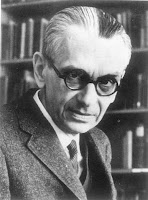
Q. [Audience] PZ, I won't presume to speak on behalf of all of my fellow mathematicians, but I'd like to point out that Gödel's ontological argument would make 99.99% of us into theists if it were really a rigorous proof. However, mathematicians are as big a hodgepodge as any other segment of the population. Gödel's argument is clearly not regarded as a proof by the mathematical community.

Q. [Robert O'Brien] It is a proof. Speaking as a statistician—

Q. [Audience] Then you're not a mathematician!

Q. PZ, could you not see religion used as a hypothesis for formulating things like a basis for morality?

A. Yes, but religion is a primitive hypothesis that has been falsified many times, as one religion gives way to another. And you don't need religion as a basis for morality.

Q. Isn't atheism just a dogmatic assertion that there is no God? Doesn't science require at least agnosticism?

A. There is no assertion of any proof of no God. Science is “operationally” atheist, not dogmatically. The God hypothesis is useless in the pursuit of science.

Q. If God is the sum of all positive and all encompassing, then doesn't the lack of negative qualities mean that he's not all encompassing?

Q. [Audience] That depends on what you mean by positive and negative.

Q. [Audience] Relativism for the win!

Q. What would it take to serve as evidence for the existence of God?

A. Believers need to provide a hypothesis that I can test and measure.

Q. Why is it always the Judeo-Christian God? Why not some other God or Creatrix? And what about the diversity of evolutionary beliefs among religions. The Catholic Church says that evolution is not just a hypothesis.

A. That was the previous pope. The current pope is not as clear about it.

Q. He hangs out with ID creationists like Cardinal Schönborn.

A. Right.

Q. Atheism says that there is no absolute basis for right or wrong. What if everyone agreed that the Nazis were right. Would what the Nazis did still be wrong?

A. If everyone agrees, then there would be no one to point out that they were wrong. “But the natural world will eventually bite you in the ass if you act on the basis that mass-killing is a good thing.”

Q. [Professor Vernon Martin] Moral objectivism is not a way out of the woods. It's a tricky business.

Q. [Audience] Thomas Schick has a disproof of God based on the original argument of Parmenides.

Q. Our notion of what is reasonable is always changing. Years ago it would have been perfectly reasonable for me to light up a cigarette while sitting in this lecture hall (and having quit within the past year, I really want to), but today it's unthinkable. We indulge in lots of practices without thinking about them, such as clipping the ears of Dobermans, because that's what we're used to at the time we do it.

A. That just goes to show that there is no objective morality.

Q. In your role as a figurehead of science and atheism, how would you direct all atheists to deal with religionists. What would be the most utilitarian approach?

A. If I were the figurehead, I would immediately resign. I value the diversity in the community of nonbelievers. I'm a biologist. I value biodiversity.

Q. It would be like herding cats anyway.

A. I am so tired of that analogy!

Q. Atheism is not a formal philosophy. It doesn't impose a uniform perspective on people.

Q. [Audience] But religionists are dogmatic and dangerous.

Q. [Audience] But not uniformly so.

Q. [Brett Ransford] Excuse me for interrupting, but could you please direct your questions to PZ? Mental masturbation is nice, but—

A. Masturbation? Oh, no, this is intercourse!

Q. Tell us about your blog! How do you manage to post so much on it?

A. I attribute it to poor impulse control. The key to a successful blog is to write several posts a day.

Q. Were you given a religious upbringing?

A. I was raised in a mildly religious family as a Lutheran. I consider that I was inoculated against religion by having been infected at a young age by a weak strain.

Q. I accept evolution, but I'm not an atheist.

A. You have my permission to go to church. Just don't use religion to interfere in the secular rights of others.

Q. I don't go to church. I hug trees.

A. There is the example of Loyal Rue, who is completely rational in his approach but is still a believer. He has a number of awards, including the Pulitzer Prize and a Templeton Foundation fellowship.

Q. Have you had any conversion successes?

A. It doesn't work that way. You present believers with your evidence in as persuasive a way as you can and then you wait and see. It might be years later before anything happens. There are examples like Kurt Wise, who studied under Stephen Jay Gould, but decided he had to accept Jesus and could not accept science. That's a failure.

Q. My friend believes that evolution is God's way of working in the world.

A. Then he doesn't understand evolution. The nature of evolution is stochastic and nonteleological. It's not guided and it has no predetermined goal except survival. Religious figures like Rick Warren need God in the process to provide meaning. I haven't written much about Warren. He thinks we're all supposed to be happy slaves under the absolute dictatorship of God.

Q. Why do so many religious people reject science?

A. Because science is in competition with their religion. Evolutionary science attacks the sense of self and purpose that they need in their lives, which they can't seem to find without deriving it from religion.

Q. There will be a talk on Relics of Eden, the evidence for evolution in human genetics, on the last Friday in February. [Details, anyone? —Z]

A. Creationists think that attacking the fossil record is the best way to attack evolution. They don't seem to understand that the best evidence is being found in biology, in genetics.

Q. Creationism keeps shifting. We've had “creation science,” “scientific creationism,” “intelligent design,” and “teach the flaws.” What's next?

A. I'm hoping it's complete collapse. Creationism has not been able to gain any scientific credibility. Groups like the Discovery Institute—which pretends to be scientific—are getting more and more fundamentalist. They don't make much headway with abstract arguments. Look at Dover, which was supposedly about intelligent design and Of Pandas and People. It was pushed by the old-fashioned creationists on the school board, who probably felt betrayed when the Discovery Institute ducked out. The Discovery Institute doesn't bring in much money anymore, at least not from their creationist activities. Answers in Genesis is the big money maker.

Q. Won't creationists just create their own schools and teach their anti-scientific ideas there?

A. Many already have. They want to destroy public education, which is like the Republican strategy.

Q. Would you say the Wedge strategy has failed?

A. Yes. It has not worked out the way they once hoped.

Q. Science flourishes in an atmosphere of opposition and questioning. Haven't creationists therefore done science a favor?

A. I'd disagree. Science grows with questioning, but creationists are a side-show. Their arguments are beside the point and are not part of the scientific discussion.

Q. Groups like Wallbuilders are trying to rewrite history.

A. Yes, that's one of the things they're trying to do in Texas right now. The Texas School Board has a great influence on the nation's textbooks. The extremists on the board are turning toward history, citing non-historian David Barton as an authority.

Q. I've heard a lot of mudslinging tonight, but we won't get anywhere if we constantly disrespect each other. Religion has been part of society for thousands of years and should be treated with more respect.

A. Bad sanitation has been part of society for thousands of years, too.

Q. You can't tell people what they believe is bullshit. You need to educate them.

A. You can do both. Bad ideas deserve to be treated with complete and utter disrespect. The ideas, not the people who hold them. Getting people to understand critical thinking and evidence is a long-term effort. It doesn't happen overnight.

Q. Will people eventually evolve beyond religion?

A. No, I don't think so. Sanitation has advanced a great deal over the years, but there are still dirty people. Society has become more civilized in many ways, but we still have crime. Crime will always exist. Religion will, too. I'm perfectly fine with people having the freedom to practice their religions in private and in their churches. I don't, however, support their right to impose their religious beliefs on me or other people. I'm rather optimistic—perhaps irrationally so—because I think progress is possible and that most people just want peaceful lives to enjoy themselves and raise their families.

Q. Should we perhaps downplay evolution and emphasize critical thinking instead?

A. Better science education is important, but that includes evolutionary theory as well as critical thinking. We can't ignore it. I also think we need to teach more mathematics as part of a better science education (although I know that Zeno will think I'm pandering to the mathematicians when I say that).

Q. I'm a nonbeliever who is worried that people will know what I think. It's great for groups like this to meet and provide a safe environment to interact with others. The Internet helps, too.

A. It can be a problem to deal with family members and friends who don't have an appreciation for the scientific approach. The Internet has been a big help in getting the message out there that you're not alone. Otherwise you might feel completely intimidated. But you also need to speak out. Isn't it better to be a tiger than a mouse?

Q. Why don't most people believe in evolution?

A. Evolution doesn't generate belief in itself. There's no reason to suspect that belief in evolution contributes to the survival of a species. Some humans believe in evolution, but most creatures don't believe in it at all.

Q. More people believe in religion than in evolution.

A. There are a lot of stupid people. Evolution does not necessarily promote intelligence as a survival trait.

Q. Perhaps part of the problem is that science isn't exciting enough. You get an endorphin rush from adventures, not from rational thought?

A. Really? You don't? There is no greater rush than learning something you've never known before, in discovering something that no one knew before. “All the best drugs are from science, you know. Discovering the truth about the universe is a real rush.”

Aftermath

As some people began to disperse and others gathered around PZ, Robert O'Brien came over to brace me with a question or two, since he had discerned that I was one of the mathematicians in the audience. (The other best-represented academic department at PZ's talk was philosophy.)

“Do you deny the existence of Gödel's ontological argument?” he inquired.

“Not at all,” I replied. “I merely observed that it's not widely accepted as a proof of anything.”

“Oh, okay. I thought you might be denying its existence. But it is a proof.”

“Not likely. Not if most mathematicians aren't willing to accept it. And we don't.”

And when I say “we,” I'm not including self-described statisticians like Robert.

A day later, Robert posted a comment on his blog concerning the Sierra College event and his confrontation with PZ Myers:
I also did not expect to be asked to defend Kurt Gödel's Ontological Argument, which I was unprepared to do. (Although, even if I were prepared, I do not think I could have done it justice as a critical respondent among an, umm, unsympathetic audience.) I give credit to PZ for unexpectedly turning the tables and essentially catching me flat-footed; it won't happen again.
Want to bet?

Sunday, January 24, 2010

PZ does Sacramento

Skeptics in the state capital

The student organization sponsoring PZ's appearance on Tuesday at Sacramento City College, the Sac City Freethinkers, is doing some nice work. A friend at a Los Rios college sent me a copy of a flier that's making the rounds (see below). Looks good, doesn't it? And five bucks gets you in.

Hey, UC Davis was free!

Never mind. It's good to see that Sac City is making an effort. Besides, the UC Davis Agnostic & Atheist Student Association did make a pitch for contributions and I tossed in some money. (Thank goodness they didn't call them “love offerings”!)

So pitch in five bucks and catch PZ in the capital city of the Golden State.

Thursday, February 12, 2009

Denying Darwin

Massive ignorance helps

The Tulsa Beacon is disinclined to join the celebrations in honor of the bicentennial of Darwin's birth (and the sesquicentennial of the publication of The Origin of Species). Instead, the Beacon chose to mark the occasion by publishing an editorial decrying the state university's involvement in Darwin Day festivities and the expected arrival of the Antichrist Richard Dawkins as a featured speaker.

The Beacon's editorial writer chose an interesting strategy with which to combat the enthusiasm of Oklahoma's intelligentsia for Darwin's legacy. How better to combat pointy-headed intellectualism than with slope-browed creationism and a display of densely concentrated ignorance and misinformation? By that token, the Beacon editorial is a brilliant success.
Evolution indoctrination at OU

February 5th, 2009

What is the difference between education and indoctrination?

The line between conveying information with an open mind and a mindset that parallels religion is being crossed this year at The University of Oklahoma with a 12-month celebration of the 200th birthday of Charles Darwin.

While devoting huge resources to a campaign to “prove” that evolution is not a theory, the scientific brain trust at OU will virtually ignore parallel theories of the origin of man—including Creation Science and Intelligent Design.
If indeed the University of Oklahoma has set out to “prove” evolution, it must be the only educational institution in the world doing so. Scientists don't “prove” evolution. They seek out and compile the results of experiments and field work. Do the results strengthen the theoretical framework in which they operate or do they argue for changes? The framework (the “theory”) within which biology operates is evolution (and has been for more than a hundred years). The Beacon editorial writer is evidently of the “only a theory” school of thought—although “thought” is probably the wrong word. He doesn't know that theories are organizational principles for the organization of observed facts.
OU will trot out Oxford professor Richard Dawkins, author of The God Delusion, to try to convince students and the public that there is no God and science has all the answers.
We can be quite certain that Dawkins will give no aid or comfort to the god-botherers while he's in Tulsa, but we can be just as certain he will not argue that science has all the answers. No scientist argues that. None.

Of course, so far science has all the good answers; that is, the answers that do anyone any good. Answers derived from religion or faith are notoriously weak, unreliable, and disputed by the thousands of contending sects. Pity, that, but true.
Darwin became infamous 150 years ago when he wrote The Origin of Species. He speculated that all life evolved from lower forms and that men were derived from the apes.

His unproven theories were all that the humanist movement needed to attack the Bible and any belief system that hints at the existence of a supreme being.
One more time: Darwin did not say that we descended from apes. He argued that humans and apes have a common ancestor. The ancestor certainly had many apelike characteristics, but it wasn't a gorilla or chimp or orangutan. Could we finally get this right, pretty please?
OU has a website devoted to this worship of Darwin and evolution. It’s clear from the content of that website that organizers believe that evolution is a fact and that if other theories are mentioned, they will be discounted or ridiculed.

Do things change? Certainly. But species don’t evolve into other species. Dogs don’t turn into cats. Monkeys don’t turn into men.
The “worship of Darwin and evolution”? Excuse me while I take a moment to genuflect.

It's not worship, Mr. Editorial Writer. It's acceptance of a successful theory. “Other theories”? Sorry: there aren't any. It's simple: no results, no acceptance. Those who prate about intelligent design and irreducible complexity and curiously warped versions of information theory won't get any respect until they produce some results. That's the reason for the well-deserved ridicule. Sad, perhaps, but completely understandable.
In fact, even secular scientists are doubting the viability of evolution concerning the origin of life. The laws of thermodynamics and common sense tell us that things don’t get better—they deteriorate.
In a word: No. Even the tiny, tiny handful of credentialed scientists who deny evolution know better than to use the laws of thermodynamics. They leave that to the hardcore creationists (some of whom probably also know better, but can't resist an argument that still stirs up the troops).

While we're at it, how about a nice list of those “secular scientists” who doubt evolution's viability? Unless you count a batch of goofy engineers, an addled semi-mathematician or two, and the occasional wacky physician, you don't have any, do you?
The biggest case against Darwin’s evolution is the fossil record. There are no viable transition fossils when there should be millions if you buy into his theory.

Where is the missing link? There isn’t one in the fossil record.
The “missing link”? No “transition[al] fossils”? If we were playing creationist bingo, there's hardly any possible configuration of entries on a bingo card that wouldn't have scored a win by now. The writer has packed so many tired old creationist talking points into one editorial that it must be under tremendous pressure. Surely we must be close to the point of a massive explosion.
Evolution science is not really science but a religion. That is why it cannot stand honest scrutiny or tolerate other views. It takes more faith to believe that men came from monkeys or a primal soup struck by lightning than it does to believe that God created the Earth and mankind in seven days.
Boom! Ka-pow!
Both are religious beliefs. Oklahoma students should be exposed to both theories (including Intelligent Design). Instead, the public school system in Oklahoma has bowed to the pressure of secular humanists and insisted that there is only one theory to explain the origin of man—evolution.
Now we're back to worshiping Darwin some more.
Incidentally, the origin of life cannot be proven by the scientific method, which requires observation and testing. No one was around when life began and no scientist—no matter how many degrees he or she has—has been able to recreate life in the laboratory.
“Were you there?” Ken Ham would be so proud!
Here’s the worst aspect of this story. State tax dollars are going to support the celebration of a mad scientist who infected the world with a new religion that teaches that God cannot exist.
Damn those schools who use tax dollars to teach science when they could be teaching religion! The writer began by asking the difference between education and indoctrination. He is firmly on the side of indoctrination, isn't he?
OU has stacked the deck for humanism and against other religions. Creationism and Intelligent Design should get equal time in this huge “celebration” of Charles Darwin.
That's right: humanism is a religion, too. And see how “equal time” just slipped in? Other creation myths need not apply, though. There's only two theories!
There is a God and that belief is held by the vast majority of Oklahoma taxpayers. Withholding that truth from our students does them a disservice and damages our society.
This just in: Tulsa editorial writer proves the existence of God by simple declarative statement. Nice job! Let me try:

Evolution is a fact. Evolution is a very successful theory. Evolution has no credible competition. Get used to it.

I slipped into imperative mode at the end there, but the simple declarative sentence is fun to write. It's harder to prove the assertions that simple declarative sentences contain, but the content of my sentences derive from a vast intellectual enterprise known as science. The Beacon's editorial writer prefers faith, so in a debate over scientific matters, he loses. Sorry, guy, but science is evidence-based.
When we tell our college students that they are nothing more than animals, why do we act surprised when they act like animals?
Who is acting surprised? Young people have always acted like animals. Of course, it's just possible that Mr. Editorial Writer was a virgin all the way through college and alcohol never touched his lips during the entire four (five? six?) years he was an undergrad. Unlikely, but at least possible. Unlike any of the arguments in his editorial.

Monday, January 19, 2009

Snubbing Sully

Credit where it's due

The editorial cartoonist for the McClatchy newspapers decided this weekend to honor the hero of the New York City airliner crash. You might be thinking that Rex Babin chose to sing the praises of Chesley Sullenberger, the veteran pilot who lives here in California and whose cool-headed response to the air-borne emergency resulted in the survival of his plane's entire crew and all of its passengers.

Nope. Babin says God did it.


Now if only God had chosen to be more helpful during other plane crashes. The ones in which he let people die. But I guess he was busy.

Wednesday, January 07, 2009

I see the light

You get out what
you put into it


FightingAtheist posted a helpful video on YouTube so that theists could understand what it would take to turn him into a believer. FA suggested that a fulfilled prediction could fill the bill, supposing that the prediction had sufficient specificity to demonstrate genuine knowledge of the future and wasn't trivial in nature. He also observed it would have been impressive if Jesus had tipped off his disciples to the theory of relativity and Einstein's equation for mass-energy equivalence:
Just think, what if Jesus had said something like this? “My disciples, I say unto thee that energy is mass times the speed of light multiplied unto itself.”
Yes, that would have been a killer item to embed in the Bible and way better than most of the stuff you find there. I also agree with FightingAtheist that it would have made the Bible a much more credible tome. If Scriptures were that scientific, a lot of us would have to line up behind FightingAtheist to be inducted into the ranks of the believers.

Unfortunately, however, the Bible is more famous for things like the implication that pi might be 3 or that crickets have four legs. The Bible is not a work of science.

Or is it?

FightingAtheist challenged his theistic viewers to post videos explaining what it would take to change their minds about God and turn them into atheists. Some of the respondents, however, preferred to try to convert FA instead and prove to him the existence of their supreme deity. (No doubt FA could have predicted this without requiring any miraculous foreknowledge of the future.) I was especially taken by the rebuttal posted by h20Enthusiast, aficionado of quack energy schemes, Christianity, and 9/11 conspiracy theories. It is h20's contention that the Bible is a book of science. The Bible clearly identifies—with astonishing accuracy—the value of the speed of light. He can prove it mathematically!


Of course, you have to do a little work to winkle it out, because it's not like Jesus simply says, “Verily I say unto you, but light traveleth as many cubits in a day as the number of weeks in a year multiplied unto itself eight-fold. That's a lot, bitches.” (There are 52.177 weeks in a year and (52.177)8 = 5.49 × 10¹³, which equals a light-day for a cubit of slightly less than half a meter—which by most accounts it was in the time of Christ. It would certainly have been in the ballpark.) h20 says it's more subtle than that.

You can (and should, but with the sound turned down) watch h20's video for the full impact of his reasoning (try not to be offended by his obligatory use of “Fools say there is no GOD” and “ATHEISTS are FOOLS”), but here's a summary of his delightful argument:

The second epistle of Peter, in chapter 3, verse 8, says, “But do not forget this one thing, dear friends: With the Lord a day is like a thousand years, and a thousand years are like a day.” It's obvious, of course, that 2 Peter 3:8 is referring to time dilation, right? How fast does one have to be traveling in order to achieve a time dilation where one day in the traveler's frame of reference equals a thousand years in the rest frame? It's simple algebra, right?


Hmm. It looks like we're about to subtract a number very close to zero from 1, leaving a number very close to one (just a tiny bit smaller, of course). Which means that we're about to discover that v, the speed of travel, is awfully goshdarn close to c, the speed of light. (But just a tiny bit smaller. Big surprise.) In fact, we get v = 0.999999999996c. To the utter amazement of h20Enthusiast, however, when he plugs in 299,792,458 m/s for c, he gets v = 299,792,457.999, plus some loose change and a bunch of exclamation points. (He's very good about showing all of his decimal places, less good in his prose style.)


h20Enthusiast finds the results compelling, astonishing, and thoroughly gratifying. You see, God encoded the speed of light into the Bible. Yes, indeed. You can tell, because when you apply Einstein's theory of relativity, which says that extreme time dilation occurs near the speed of light, and demand extreme time dilation equating 1 day to a thousand years, you get a velocity very near the speed of light. Awesome. And when you plug in a long decimal expression for the speed of light, you get it back!

Amen. And try not to laugh.

Addendum

h20Enthusiast may be pleased that his YouTube video went from 60 viewings to 300 in less than half a day after I cited it here (and drew a crowd of visitors from Pharyngula). He seems less pleased that his argument (which he attributes as original to xRevelator) is regarded as unpersuasive. He's posted some responses to the comments on the YouTube page for his video:
h20Enthusiast (1 hour ago)

I do understand your objection.... it doesn't look like evidence to you ... I get it.

h20Enthusiast (1 hour ago)

im implying the AUTHOR also CREATED the speed of light.

sorry if that doesn't fit inside your head.
Actually, it fits inside my head just fine. Perfectly comfortably. Vacuous statements don't take up much space.

Postscript

h20Enthusiast quickly grew tired of being assaulted by atheist hordes (or so it appears) and made his video private. Although I captured the key items in this post (and you can see other details at Good Math, Bad Math, the entire content of h20's video is essentially a video transcript (with a few anti-atheist insults sprinkled in) of xRevelator's screed on his YouTube page, which you can check out in its original form here. Or just pore over the following rant, where I quote xRevelator's statement in extenso for your edification:
STATEMENT OF BELIEF

Why do I believe in God? I am a scientific person and everything should be weighed carefully by facts and evidences. No compromises.

The verse that peaked my interest is this one:

Peter 3:8 NIV

"But do not forget this one thing, dear friends: With the Lord a day is like a thousand years, and a thousand years are like a day."

One might ask, how can a day be a thousand years and a thousand years be a day? This sounds rather absurd. But, using scientific knowledge, the absurd becomes logical.

It is called Einstein's Theory of Relativity - Time Dilation.

Here is a mathematical explanation:

Say, if a spaceship traveling at 80% the speed of light for 1 hour, how much time has passed by relative to Earth?

Δt' = γ Δt
. . = Δt / √( 1 - v² / c² )
. . = ( 1 hr ) / √( 1 - ( 0.8c )² / c² )
. . = 1 hr / √( 1 - 0.64 )
. . = 1 hr / 0.6
. . = 1.667 hr

The earth experiences 1.667 hours.

Therefore, the spaceship is effectively traveling to the future as 1 hour on the spaceship traveling at 80% the speed of light equals 1.667 hours on Earth.

Reading the verse again (Peter 3:8), how fast is the Lord traveling so that a thousand years on Earth is like a day with Him?

Solution:

Δt=t_0/√(1-v²/c²)
1000 years=1day/√(1-v²/299,792,458² )
365250 days x √(1-v²/299,792,458² )=1 day
133407562500 x (1-v² / 89875517873681764) = 1
133407562500-133407562500v²/89 875517873681764=1
-33407562500v²/898755178736817 64=-133407562499
-33407562500v²= -11990073767863191518066568236
v²=89875517873008072.672541095 531972
v=299792457.998876403809564537 24992

The answer is 299,792,457.998876403809564537 24992 m/s. The speed of light is exactly 299,792,458 m/s. It strangely yields a resultant of 99.999999999625% of the speed of light. This is truly baffling.

We should take note of the strange accuracy of the verse. It could result to any random number, but what is truly baffling is that it registers a resulting answer digit for digit accuracy of the speed light except for the last digit before the decimal.

The answer obviously should be less than the speed of light because time will cease to exist at infinity at the speed of light.

The Bible has clearly demonstrated by this simple verse on its precise accuracy of scientific facts way beyond its time. The first quantitative estimate of the speed of light was only made in 1676 by Ole Christensen Rømer and Time Dilation by Einstein only in 1905.

How is it possible that the ancient Bible holds hidden knowledge of time dilation and the speed of light? This is quite strange which offers no logical explanation.

Either we dismiss this as mere coincidence or we accept the Bible as a book of truth.

This is no longer a matter of belief, but rather a matter of accepting reality.