Showing posts with label Martin Gardner. Show all posts

Thursday, September 21, 2006

A classroom conversion

Peter Fromm's name is not legion

P.Z. Myers over at Pharyngula has linked approvingly to the website of a high school science teacher, Ms. SuperScience. The teacher is unapologetic about teaching real science and recounts a brief encounter with an upset parent. A mother replies to her statement that the biology class will definitely cover the evidence for evolution by repeating a popular creationist talking point: “Well, what evidence, because there really isn't any?” Ms. SuperScience shows her no mercy, citing the findings of molecular biology and discoveries in the fossil record. The creationist flees.

She may well return, but it will undoubtedly be to joust further with the science teacher, not to admit that the teacher is right and she is wrong. It is a symptom of the closed mind of the creationist that evidence is irrelevant. First they say it doesn't exist and then, when you display it in abundance, they either reject it as irrelevant, suggest it's misunderstood, or imply it's fraudulent. It can't be right, you see, because God the Creator would never allow it.

Strangely enough, though, I think the creationist mother is right to be concerned, at least from her point of view. There is no better treatment for a narrow religious point of view than immersion is a good secular university. Young people are less deeply programmed than their ossified elders, for whom data-filtering has become a way of life. It must be even more dangerous when high school teachers are brave enough to teach science as it is rather than as the religionists would prefer (which may very well be “not at all”).

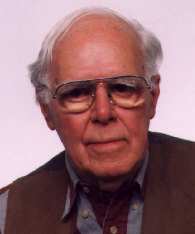
The estimable Martin Gardner wrote a neglected novel titled The Flight of Peter Fromm. It's a semi-autobiographical work that recounts the spiritual and intellectual journey of a Bible-believing young man who finally comes to realize that his childhood training is a tissue of myths and fantasies. His epiphany comes in the form of a lecture on geology:
Peter had raised his hand in class one day, Blitz told me, to ask if it were possible that all the sedimentary rock on the earth had been deposited at the same time. “You mean,” said Blitz, intending to be funny, “by the big flood described in the Old Testament?” Everyone in the class laughed except Peter who nodded gravely.

“I was dumbfounded,” said Blitz. “I didn't want to embarrass the kid by arguing with him in front of the class, but I spent the rest of the hour going over all the evidence I could think of that proves sedimentation has been going on for hundreds of millions of years. The boy listened without batting an eyelash. After class he came up and asked if he could see me sometime in my office.”

Blitz pushed away his empty dessert dish and blotted his mustache with a napkin. “When he came to see me he had a big book with him called The New Geology. It was by some knucklehead named Price.”

“I know the book,” I said. “Price is a Seventh-Day Adventist who lives in Walla Walla, Washington. He must be as old as Methuselah. You know, he was the scientific authority William Jennings Bryan kept referring to during the Scopes trial in Tennessee.”

“It figures,” said Blitz. “I borrowed the damn book and stayed up half the night reading it. I had no idea anyone like Price still existed. Why, he has the notion that....”

“You don't have to tell me about Price,” I said. “I've read his book.”

Blitz lifted his bushy eyebrows. “Sometimes you amaze me, Homer. Is there anything you haven't read? Have you seen my latest paper, ‘Vadose and Phreatic Features of Limestone Caverns’?”

I laughed and shook my head.

“I was so fascinated by Price,” Blitz went on, “that next day I took his book to class with me. For three days all I did was talk about Price and the man's priceless stupidities. When I gave the book back to Peter, do you know what he did?”

“He still wanted to argue about it?”

Au contraire. He shook my hand and thanked me. He told me those were the most important lectures he'd ever heard.”

I felt relieved. Peter meant, of course, exactly what he said—he always meant what he said—even though he could not then have been aware of how sharp a corner he had turned. To change the metaphor, Blitz had driven the point of a geological hammer into the rock of Peter's fundamentalism. He had opened the first tiny fissure through which the waters of modern science could begin their slow erosion. Now the metaphor breaks down. It may take a million years for a boulder to crumble. A religion can crumble in a few centuries. A man's faith can crumble in less than a year.

Peter threw away his copy of The New Geology.
Peter was more receptive toward evidence than most creationists, but remember that he's based on Martin Gardner's own growing-up experiences. It's not just a fictional account. Science teachers who keep teaching actual science will make it possible for other students to make their flight from unreason.

Friday, March 24, 2006

Chef d'oeuvre

There's got to be a morning after

The first time that Chef quit, it didn't take. That was back in 1999, when South Park's culinary sage decamped from the cafeteria to wed his girlfriend Veronica and take a job as a hatless drone in an office cubicle. Remember Veronica?

Ah, Veronica! The children were certain she was sucking the life out of Chef, although he refused to believe it. While Chef's head spun with thoughts of love and happily-ever-aftering, the kids became increasingly convinced that she was a succubus. As we know, the children were right and finally managed to exorcise her during the wedding ceremony by singing her signature tune backward. (It was There's got to be a morning after, the theme song from The Poseidon Adventure.)

Just what is a succubus? Here's a definition:

suc·cu·bus
Function: noun
Etymology: Middle English, from Medieval Latin, alteration of Latin succuba paramour, from succubare to lie under, from sub- + cubare to lie, recline. A demon assuming female form to have sexual intercourse with men in their sleep.
Hmmm. A demon? Where have we heard that before? Could it be ... Xenu?

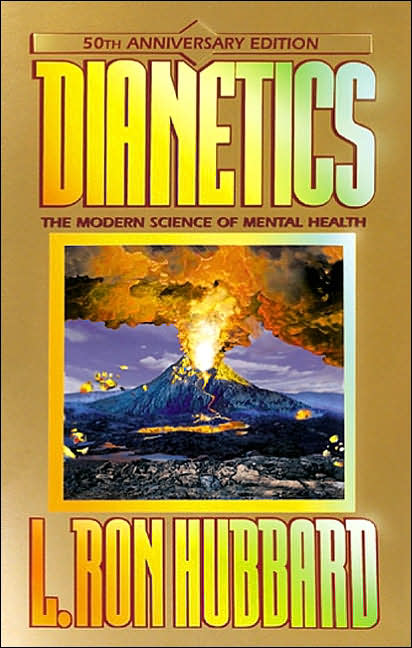
Trey Parker and Matt Stone have cheerfully trashed religions before, in particular their scathing episodes on the Roman Catholic church (Red Hot Catholic Love and Bloody Mary). It was just a matter of time before Scientology—the “science fiction religion” in Christopher Evans's telling phrase—got its turn. The tenets of Scientology are doled out to its adherents based on the level of initiation to which they ascend. While supposedly secret, too many people have now gone in and out of the religion to permit all of the juicy details to remain confidential. The tale of evil Xenu, which played out like a parody in the crude animation of South Park was in fact a highly faithful treatment of Scientology's central dogma. The erupting volcano still featured on modern editions of Dianetics: The Modern Science of Mental Health is most likely an allusion to Xenu's genocidal population reduction scheme in which surplus beings were packed into volcanoes and blown up with H-bombs. Does your religion have any stories that good?

Lafayette Ronald Hubbard famously told some of his science fiction colleagues that “If a man really wants to make a million dollars, the best way would be to start his own religion.” Today the dearly departed L. Ron Hubbard is the icon of a vigorous cult that hopes to grow large enough to become considered a mainstream religion. (The main difference between a cult and a religion is numbers.) In a series of zig-zag moves, Hubbard cobbled together Dianetics, a secular system of supposed mental health treatment, and Scientology, a religious system that subsumed Dianetics into its creeds and rituals.

Hubbard had been making his living as a reasonably successful science fiction writer in the pulp era before World War II. However, his best days as an SF author were past when Dianetics and Scientology took over his life, and the lives of his followers. His work was big news and controversial from the very beginning. One of his early critics was Martin Gardner, who took aim at Dianetics in Fads and Fallacies in the Name of Science, published in 1957. Gardner has been a perceptive critic of pseudoscience and charlatanry throughout his long life, but his own keen vision may occasionally be unclear when he tries his hand at prognostication:
At the time of writing, the dianetics craze seems to have burned itself out as quickly as it caught fire, and Hubbard himself has become embroiled in a welter of personal troubles.
That was accurate enough back in the 1950s, but Hubbard's mounting difficulties were the impetus behind his momentous decision to incorporate Scientology as a tax-exempt religious organization (although the tax-exempt status was not formally recognized by the Internal Revenue Service till the 1990s). A decision to lay snares in Hollywood in the form of a glitzy celebrity center worked to provide Scientology with the famous faces that we see today as the glamorous aspect of the religion, although zealots like Tom Cruise appear to occasionally overplay their hand. What is a nice (formerly) Catholic girl like Katie Holmes doing in a place like that?

After Martin Gardner's premature eulogy for Dianetics, its resurgence in the form of Scientology caused Christopher Evans to feature the new religion in his Cults of Unreason in 1973, a book now long out of print. Evans devoted Part I (The Science Fiction Religion) of his book, over 100 pages, to the development of Scientology from its dianetic origin to its religious transformation. However, as he wrapped up his account, Evans proved to be no better a seer than Gardner:
Readers of the book up to this point may be surprised to find that after highlighting the absurdities, inconsistencies and smoky background of Scientology, I conclude without giving it a wholehearted thumbs-down. The reasons for this are quite straightforward. The closer I have looked at Scientology the more I feel that it is changing for the better, and the more eager I believe its leader and its adherents are to forget its past.
The late Dr. Evans was more hopeful than correct, I fear. While Scientology may be in some respects eager to “forget its past,” perhaps we might be forgiven for doubting that today's Scientology is somehow more kindly and forgiving than the Scientology of the past. While the religion's notorious “fair game” doctrine was supposedly rescinded in 1968, Scientology's critics still find occasion to feel that they are still being treated according to that policy:
Fair Game: May be deprived of property or injured by any means by any Scientologist without any discipline of the Scientologist. May be tricked, sued or lied to or destroyed.
For their part, Parker and Stone appear unfazed by Scientology's reputation for playing rough. They were, however, uncharacteristically lacking in imagination when they released a statement saying, “[T]he million-year war for Earth has just begun!” A million years is small potatoes to Scientology, whose acolytes sign trillion-year contracts when they join the church.

“Luke, I am your father!”

The fuss over Chef's apparent departure from South Park is only the latest—and one of the tiniest—installments in a soap opera that undoubtedly has many chapters to go. Given Hubbard's tendency to conjure up holy writ off the top of his head, coupled with his seat-of-the-pants management style, Scientology developed in a haphazard way. The church accumulated truckloads of scattershot scripture and divine directives, much of which will never be reconciled into a coherent whole. That may not matter, though, as the current leadership continues to mine the Hubbardian trove for nuggets they can dole out to their most devoted adherents. It is necessary to keep feeding the appetites of those who are so expensively walking Hubbard's Bridge to Total Freedom. At each step across the Bridge, more arcane dogma is dispensed.

Tom Cruise has supposedly reached the high-level status of Operating Thetan VII. What secrets might he know? One widely rumored Scientology secret is the identity of mass murderer and arch-fiend Xenu. If you are steeped in the literature of science fiction, you might be able to venture a wild guess. Imagine that Xenu lifts his mask and you find yourself staring in horror at the face of ... R. Daneel Olivaw! Oops! I mean ... Annakin Skywalker himself! Oh, sorry. I meant to say ... L. Ron Hubbard! I'll bet you're surprised! Yes, it could be that L. Ron Hubbard was the human incarnation of the evil Xenu, working out his redemption in works of healing and charity among us mere mortals.

Gosh! Who could have seen that coming?

Other references

In addition to the Gardner and Evans books, there are at least two full-length biographies of L. Ron Hubbard, both unauthorized by the Church of Scientology, which examine the fables and myths that Hubbard spun concerning his own life and achievements. Russell Miller's Bare-Faced Messiah, originally published in 1987, is available as an on-line text. Bent Corydon's L. Ron Hubbard: Messiah or Madman? comes down firmly in favor of the second option. It is in print in a paperback edition and recounts the travails of a disaffected Scientologist as he and his wife are elbowed out of the organization; it's a patchwork quilt of a book and can be criticized as one long complaint by a disgruntled ex-Scientologist—which it is—but that's also where the insider's perspective comes from.

Finally, let me draw your attention to a curious novel by science fiction writer Norman Spinrad. The Mind Game is an obvious roman à clef in which Transformationalism is a thinly disguised version of Scientology and its megalomaniacal founder is none other than L. Ron. If you've read any of the Hubbard biographies, you can't help but wonder how many of the incidents described in The Mind Game are authentic and which are the products of Spinrad's imagination. The true story of L. Ron Hubbard doesn't need embellishment in order to be fantastic.

Update: Gary Farber noted in comments that Hubbard was less than a successful writer in the days preceding the launch of Dianetics and I've amended the article accordingly.